

Out of all the reasons food gets wasted at home, a poorly organised fridge tops the list. You buy fresh vegetables, store them, and find them soggy three days later (every single time, without fail). So much of it spoils quickly simply because it’s out of sight and out of mind.
To make things worse, Australian households discard between $2,000 and $2,500 worth of food annually. Most of it was perfectly edible. Without a system to track it, the fridge swallowed it whole.
To cut down on wasted food at home, we’ve put together a practical guide covering how to store food properly, use date labels, and plan meals. Read on, and you’ll have a clearer fridge and a lighter bin by the end of the week.
The Visibility Problem: Why Good Food Gets Forgotten
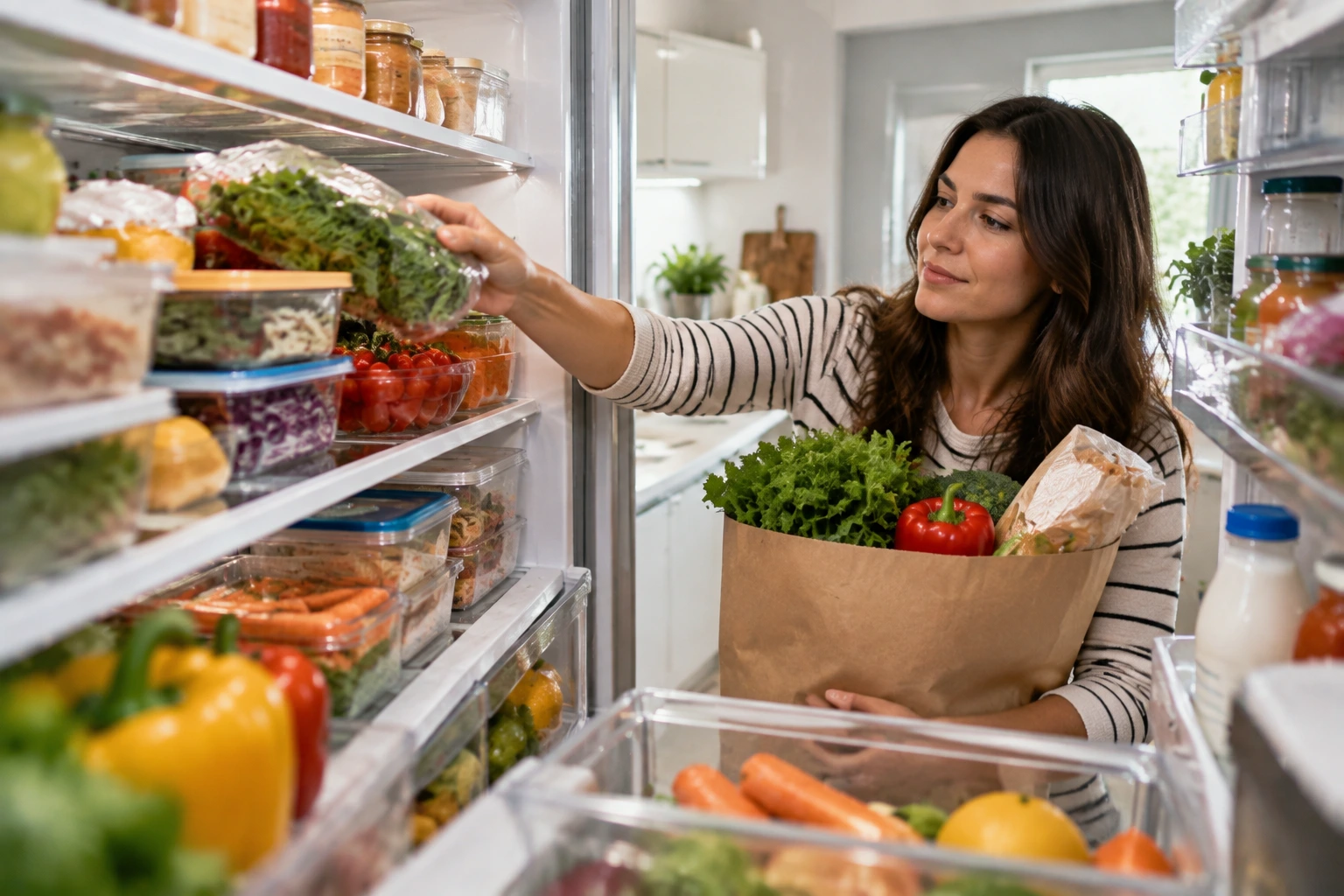
That $2,000 problem starts right inside the fridge, and it happens the same way every time. Overcrowding pushes older items behind newer ones, and without a system to track them, perfectly good food gets forgotten before anyone thinks to look. By then, the use-by date has passed, the food has spoiled, and another meal lands in the bin.
A fridge without zones is like a filing cabinet with no labels. Everything’s in there, but good luck finding anything before it expires. And this isn’t a small problem.
The National Food Waste Strategy found that Australia wastes around 7.6 million tonnes of food each year. Of that total, households are responsible for nearly 30%, which works out to around 2.5 million tonnes every year. Most of that waste comes straight from home kitchens, and the majority of it is perfectly edible food.
To fix it, you’ll have to start with how you organise what’s already in your fridge.
Meal Planning to Reduce Food Waste Before It Starts

The best way to reduce food waste is to stop it before the food even enters the fridge. Most consumers buy fresh produce without checking what’s already at home, and that’s where the waste begins. A simple scan of the fridge before writing a meal plan takes two minutes and saves you from buying food you already have.
The problem runs deeper than just habit, though. Fight Food Waste CRC found that while 76% of Australians want to reduce food waste, most underestimate the actual amount they discard each week.
A consistent meal plan and a quick fridge check before every shop are two practical solutions that directly address that disconnect.
The Weekly Shop Reset
A quick sneak peek of existing stock (vegetables, fruit, and leftovers) before every shop stops duplicate purchases before they happen. Those duplicates overload the fridge, push older food further out of sight, and give it just enough time to pass its use-by date unnoticed.
Love Food Hate Waste recommends checking what’s already in the fridge before writing down ingredients for the weekly shop. That way, one ingredient like mince can stretch across two meals, and nothing gets bought twice.
There’s an environmental cost to consider too. Decomposing food in landfill produces methane, which is a potent greenhouse gas that contributes to climate change. Reducing household food waste is one of the most direct ways Australians can cut those emissions at home.
Using What You Have First
That pre-shop habit works hand in hand with how you use what’s already in the fridge. Planning around existing ingredients means every item gets eaten before it expires.
One way to stay on top of expiry dates is to check the fridge every two to three days. From there, pull anything close to its use-by date onto a visible shelf and plan the next meal around those items first.
For anything that won’t get eaten in time, the freezer extends the life of most food considerably. Store items in airtight containers before freezing to keep them safe and reduce waste.
As a general guide, cooked meals, raw meat, bread, and most vegetables freeze well. Soft dairy, raw eggs, and high-water vegetables like lettuce and cucumber are better eaten fresh.
Either way, the aim is to keep food moving so nothing goes to waste needlessly.
Building a Sustainable Kitchen That Reduces Food Waste

At this point, the pattern is clear. Small, repeatable habits applied consistently are what keep a household’s food waste low week after week. We’ve seen households cut their weekly food waste in half just by shifting to an updated check-before-you-shop routine, and these tips make that shift easier than most people expect.
Across the fridge, the freezer, and the shops, three habits do most of the heavy lifting:
Habit | Action | Outcome |
Zone Your Fridge | Assign a fixed spot for each food type | Food stays visible, and nothing expires unnoticed |
Label Everything | Write the date on containers and leftovers when you store them | Older food gets priority and waste drops |
Shop With a Plan | Check the fridge before you buy anything new | Duplicate purchases stop, and the fridge stays manageable |
None of these habits works in isolation, and that’s the point. Over time, they reinforce each other until checking the fridge, labelling containers, and planning the shop all happen without much thought. That same zoning system also prevents contamination, since raw meat stored on the bottom shelf can’t drip onto food that doesn’t get cooked.
For Australian households, committing to these sustainable habits is what drives lasting change, reducing food waste and greenhouse gas emissions week after week.
Less Waste Starts With One Fridge Shelf
Food waste is a costly problem for Australian households, and it touches every kitchen across the country. Small, repeated actions in the right places are what bring a household’s food waste down for good.
As we covered throughout this article, fridge zoning, date labels, and meal planning each tackle a different part of the problem. All three work better when you use them together, and the results build naturally over time.
There’s always more ground to cover when it comes to reducing food waste at home. Eco4theWorld walks Australian households through every practical step needed to cut waste, save money, and do right by the planet.
Visit our website to keep reading.