
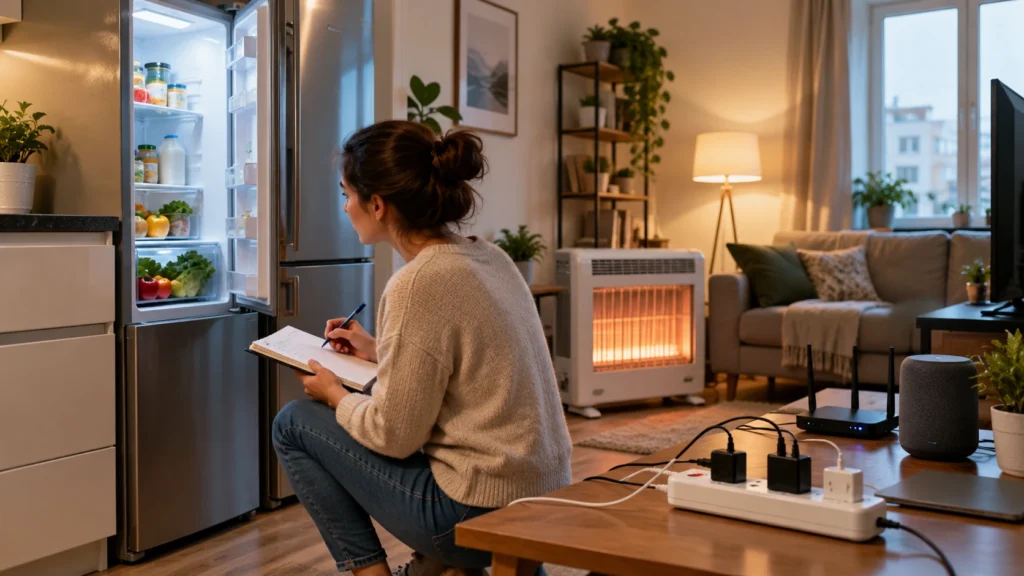
You can run a home energy audit while renting by reviewing daily habits and appliances like your fridge, heater, and standby devices. It helps identify waste and reduce energy consumption without changing the property itself.
For many renters, rising bills become frustrating when upgrades like insulation or new appliances are not possible. We’ve seen that small checks often reveal waste from things like open doors, long showers, and gadgets left switched on.
In this guide, we’ll walk through six checks covering standby power, lighting, heating, hot water, appliances, and energy tracking. Keep reading to find where your rental is losing energy and what you can do about it.
What Counts as a Home Energy Check When You Rent?
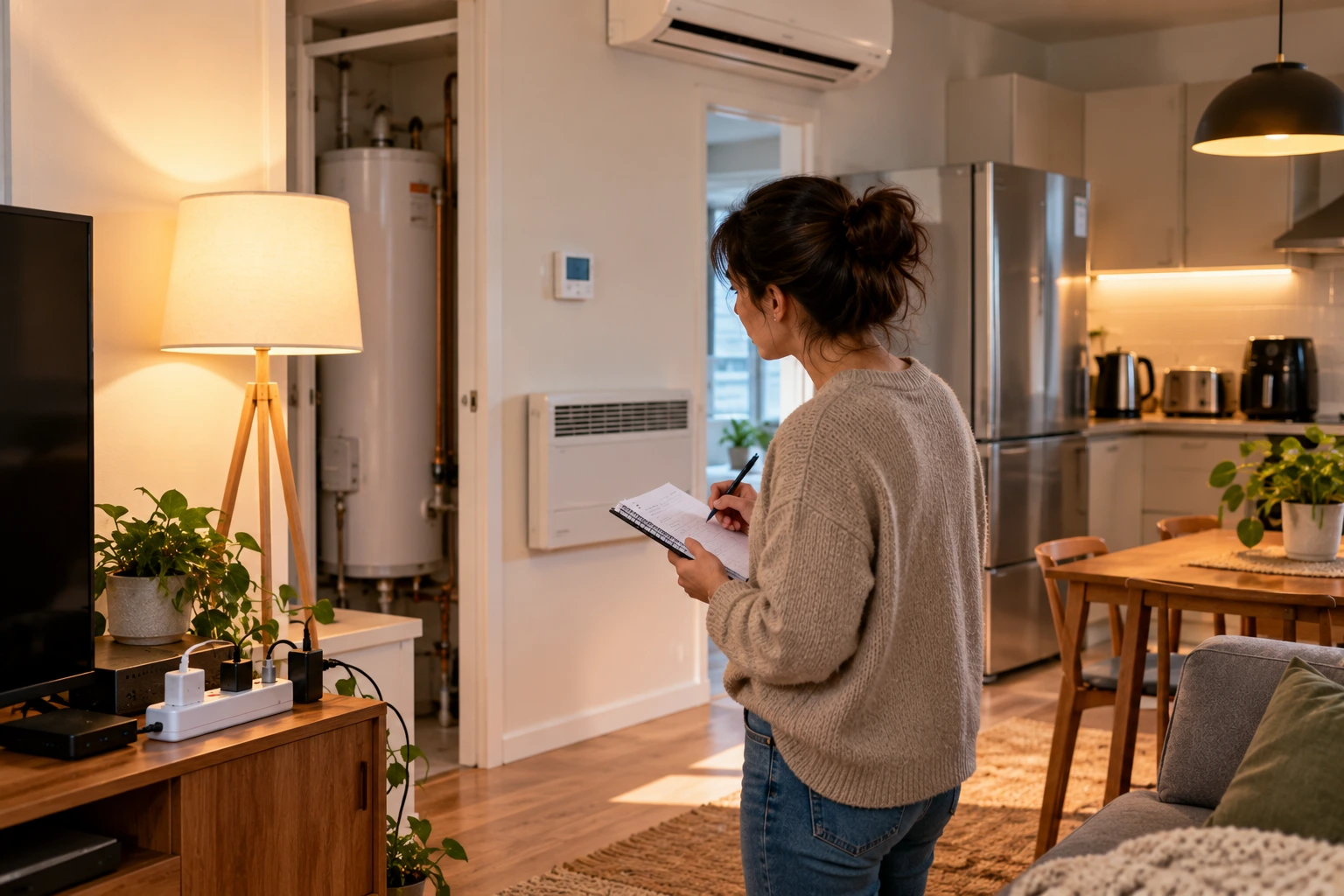
An energy assessment for renters means checking where and when you use electricity, then identifying waste you can control. Start by reviewing plugged-in devices, lighting, heating, warm water, and everyday appliance habits to understand your energy usage. None of these requires changing the property.
The goal is to spot patterns before deciding what to change. Based on what we’ve seen in rental properties, simple adjustments often start with overlooked habits. Common examples include switching off standby devices or running the heater only where you need it.
The Hidden Cost of Standby Power
Standby power drains your energy bill because devices left plugged in keep drawing electricity, even when they’re switched off. Multiply that by every device in the house, and it becomes a cost worth fixing.
It often comes from everyday devices. A television left plugged in, microwave clocks, chargers, or appliances with built-in timers can all draw electricity over time.
According to energy.gov.au, standby power can account for up to 3% of a household’s electricity use and cost around $100 a year. The actual amount depends on the devices in your home and how often you use them.
Think of standby power like a tap left dripping overnight, and the only fix is shutting it off at the source. A power board does that. Plug in the charger, microwave, and any other device you’d normally leave switched on, then flick one switch each night to stop them all at once.
Light Swaps That Lower Your Bill
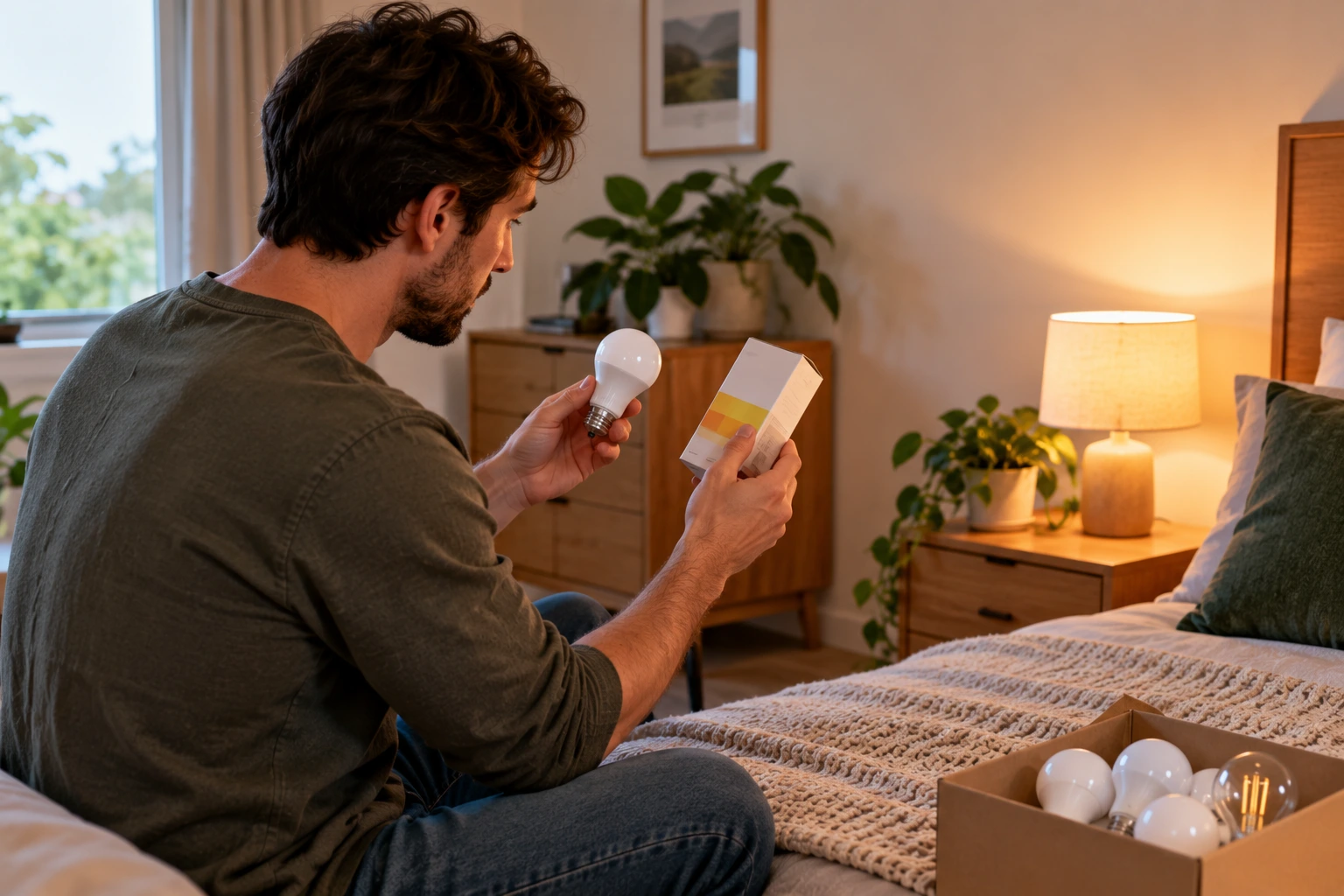
Old incandescent globes use more power than modern LED globes, which adds to running costs every day they’re left switched on.
Before buying a replacement, check the energy rating label to compare energy efficiency across different options. Energy-efficient LED lights use a fraction of the power and last longer, so the swap can pay for itself quickly.
Natural light helps too. Opening curtains when the sun is out cuts your reliance on lamps altogether (yes, even that hallway light). Small habits like these can reduce overall electricity use.
Why Doors and Thermostats Waste So Much Energy
Open doors can let heated or cooled air escape, forcing your heating or air conditioning to work harder. Three everyday habits stop that waste in its tracks:
- Keep the Thermostat Steady: Set the thermostat to around 18°C in winter instead of constantly adjusting it. That’s because each degree above that can increase consumption, so a steady setting avoids that repeated expense.
- Check the Doors: Even with the thermostat set correctly, an open door can let warm air drift into colder parts of the home. The heater then runs longer as it tries to maintain the set temperature.
- Keep Heated Rooms Closed Off: Once the heater is running, close doors to unused rooms. This keeps warm air within a smaller area and reduces how much space needs heating. The same approach helps your air conditioner during summer.
None of this needs a tradesperson or a new thermostat, just remembering to check the setting and shut the door behind you.
Cutting Hot Water Costs Starts in the Shower
Heating water can account for a sizeable share of household energy use, which makes it worth paying attention to how you shower and use the taps. For renters, these are also some of the easiest changes to make.
Shower length is a good place to start. Compare a few common patterns below to see where your usage can quickly increase.
Habit | Typical Impact |
10-minute shower | Highest hot water use per person |
5-minute shower | Cuts hot water use by roughly half |
Lower thermostat setting | Reduces running costs further |
Cutting even a few minutes reduces how much you use daily, which can lower energy consumption over time. Adding a little more cold water can reduce it further.
Together, shorter and cooler showers give renters two simple ways to cut hot water use.
What Your Fridge and Dryer Are Costing You
Cooling appliances like fridges run around the clock, while dryers draw more power for shorter periods. Checking how efficiently each one operates can reveal avoidable power use.
The Fridge Seal Test
A worn fridge seal lets cold air escape, which forces the compressor to run longer to hold the right temperature.
The seal test is simple: shut the door on a piece of paper, then pull it out. If it slides easily, check other spots to find and seal gaps. Sometimes, built-up dirt simply stops the door from closing properly.
For anything more than dirt, visible cracks or loose sections are worth flagging to your landlord or property manager.
Air Drying vs Dryer
Once the fridge is checked, the dryer is the next appliance worth a look. A single load can cost around 40 to 90 cents to run, depending on the type, and that cost repeats every week it gets used. Air drying costs nothing by comparison, and most fabrics handle it just as well, aside from a little extra stiffness a quick shake usually fixes.
When the dryer is unavoidable, run a higher spin cycle in the washing machine first, if your clothes and machine allow it. The faster spin removes more water from the load, which leaves less for the dryer to remove. Ultimately, it shortens the drying cycle and reduces the electricity used per load.
Tracking It All Without Guesswork

A monthly bill alone won’t tell you which changes are working. Tracking energy usage gives you a clearer picture of what’s reducing consumption, and a few simple tools can help.
- Plug-In Monitors: A plug-in monitor shows how much power individual appliances, including fans, draw. The instant reading makes it easier to spot devices using more electricity than expected.
- Track the Pattern: Once you have those readings, apps like your electricity retailer’s usage dashboard or the free Energy Rating Calculator can track usage over several weeks. This gives you a clearer pattern and can reveal unusual spikes that a single electricity bill may not show.
- Comparing Your Bills: A couple of weeks after making a few changes, compare two billing cycles to see how much consumption and cost have dropped. You can also use an energy rating calculator to estimate what those changes mean for your costs.
A few minutes a week is a small trade for knowing what’s paying off and what isn’t.
Your Next Steps After the Home Energy Audit
Renters have less control over major electricity upgrades, but cutting electricity use doesn’t require a single renovation. Once you know where waste is happening, you can focus on the everyday changes within your control and start saving from there.
Together, the six checks in this guide cover standby power, lighting, doors, hot water, appliances, and energy tracking. Each one gives you a practical place to look for waste and try simple ways to save.
A good place to start is standby power or shorter showers, then track your consumption to see how much you’re saving. For more tips on power saving, Eco4theWorld can help you keep cutting waste around your rental.