A rooftop of solar panels on one small hall in a New South Wales (NSW) basin community doesn’t sound like much. But that single project ended up outlining how nearby towns handle water and energy today. That’s the strange thing about sustainability projects: they rarely stay local for long.
Many assume sustainability progress requires major investment. Small communities keep proving otherwise, one project at a time. Honestly, their ideas travel much faster, often reaching other basin states within a few years.
In this article, we’ll look at what makes these projects work, how they create opportunities for residents, and how successful ideas spread to other communities worldwide. The stories behind these projects reveal why action from people in the area deserves a closer look.
What Makes a Local Sustainability Project Work?
A sustainability project works when it solves one specific problem that local communities always face. Most projects also start small, backed by a sustainable communities program and local government funding.
Before we get into the details, here’s a look at what holds these projects together:
Sustainable Communities Program Basics
A sustainable communities program starts with local government funding and a clear plan for the money. Councils typically run a short consultation first, so residents can share ideas before anything gets built. This step alone can outline the whole direction of the program.
But getting the funding approved is rarely the hard part. The main challenge is keeping locals engaged once the initial excitement fades. This issue appears during execution rather than the planning stage.
That said, councils that succeed tend to check in regularly. They share updates and ask for feedback along the way. This keeps residents invested in the outcome. It also means fewer surprises when the project finally wraps up.
Solar Panels and Water Recovery in Action
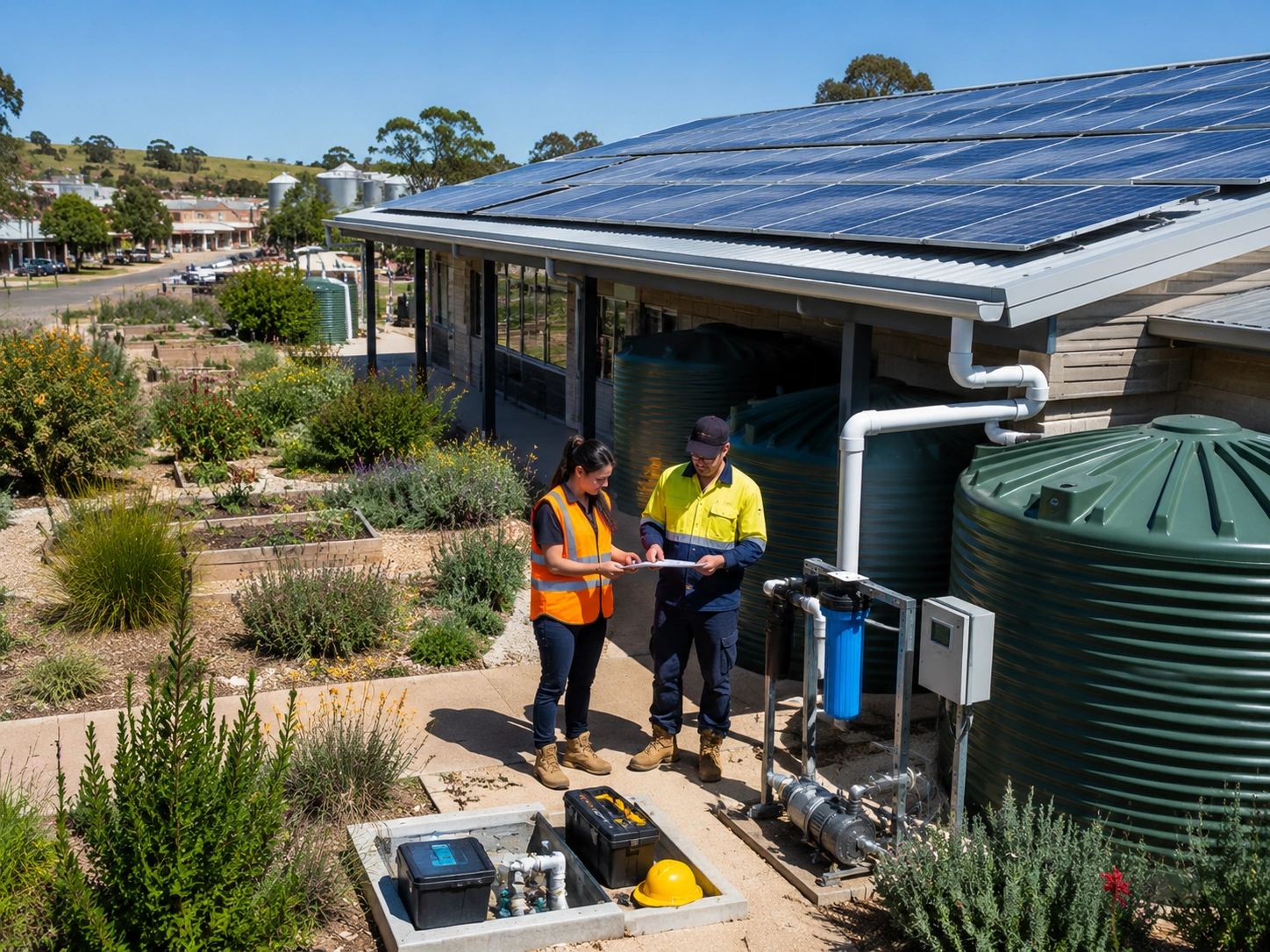
Solar panels cut a community’s reliance on grid electricity by capturing energy straight from the sun. Once installed, they pay for themselves within a few years through lower power bills. That’s a solid incentive for towns already watching every dollar.
At the same time, water recovery systems work on a similar principle, just with a different resource. They capture and reuse water that would otherwise go to waste, which means using less water overall. Many basin communities have leaned on this tech during dry spells.
One NSW town combined both systems in a single project, which cut its energy bill and water use at once. The result surprised even the council that approved it. It’s proof that these two ideas work even better together than apart.
Regional Development: How Small Towns Punch Above Their Weight
The best part about regional development is how fast it turns into local jobs. A single sustainability project can shift a town’s whole economy within a couple of years.
Let’s see how that shift plays out. First, we’ll look at the jobs themselves, then where the money comes from,
Socio-Economic Impacts on Local Jobs
Sustainability projects create local jobs that didn’t exist in the region before. These roles usually sit within primary industries like farming, water management or renewable energy. Their impact reaches beyond job creation by strengthening local skills, businesses, and economic activity.
Most new hires need some training prior to the project’s start. Councils tend to partner with local training providers to close that skills gap quickly. For many participants, hands-on experience helps build the confidence and skills needed for the role.
These social and economic impacts build on each other over time. More jobs mean more spending in local shops and services. In turn, that spending helps support smaller economies that were struggling before the project began.
Where the Funding Comes From
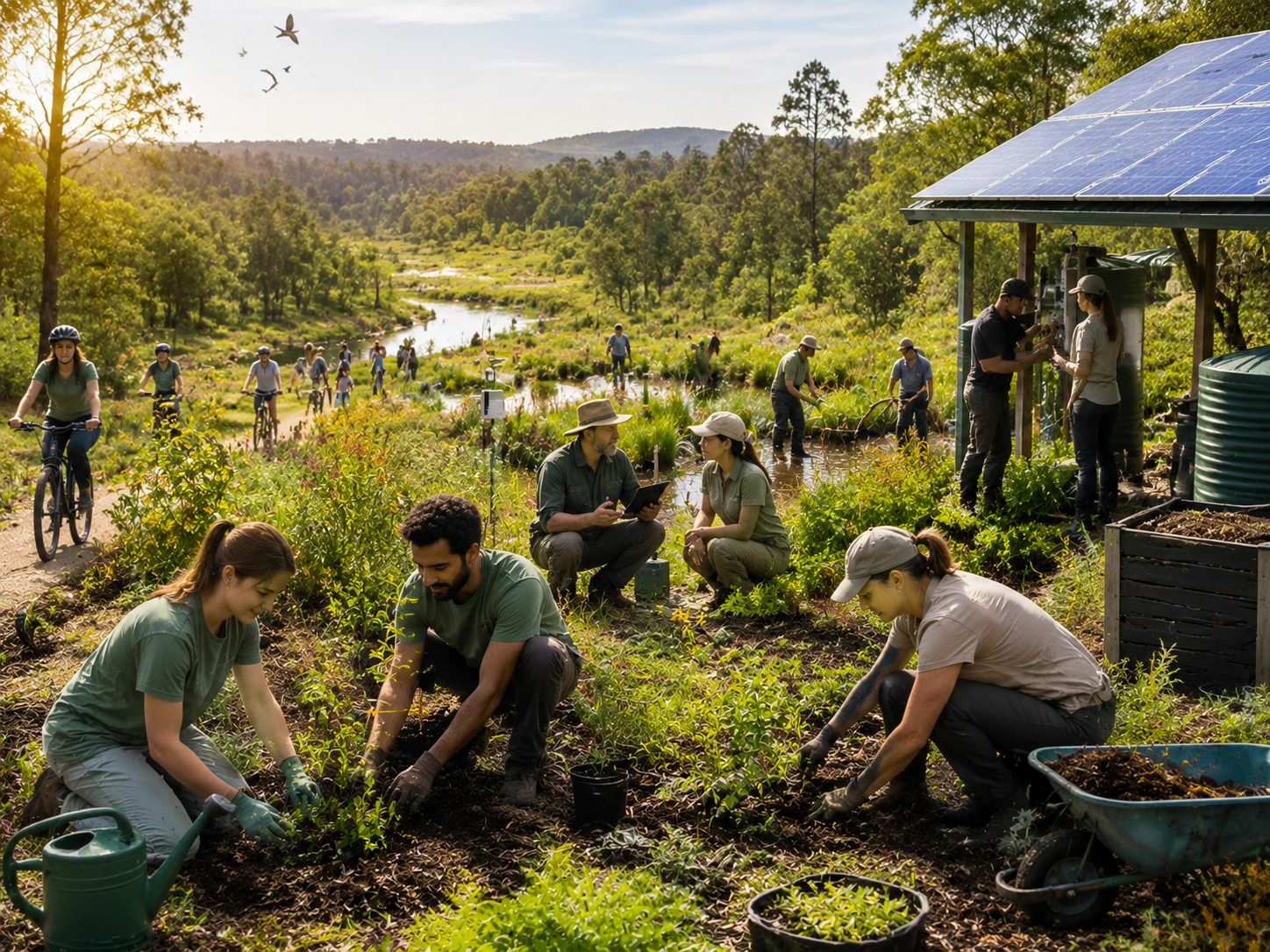
Most sustainability projects run on a mix of grants, council budgets, and private funding. The Australian government offers several grant programs specifically for regional development. Local government covers the rest through existing budgets.
When it comes to funding, councils and project partners normally share information through public announcements. Council annual reports generally list every grant and partner involved. These reports can show where funding is allocated and how projects are supported.
For example, one regional water recovery scheme ran on half council money and half a private grant. Combining funding sources like this is common, and it speeds up approval. It also spreads the financial risk across all parties.
Can One Eco-Friendly Project Really Slow Climate Change?
One eco-friendly project can’t reverse climate change on its own, but it can measurably slow it down. Every tonne of emissions cut adds to a much wider global total.
This impact comes from the ripple effect these projects create:
Climate Change Ripple Effects Explained
Emissions work a bit like waves on a pond. They reach well past their starting point. One town’s clean energy switch doesn’t stay contained to that town’s air. It eventually adds to global patterns, just at a smaller scale.
This is why climate scientists collect data from small projects rather than national ones. Those findings give evidence of what works before it’s rolled out further. Researchers frequently use this evidence to guide climate policy decisions.
With that in mind, the following table shows how individual efforts build into wider change.
| Local Action | Global Impact |
| One solar-powered facility | Cuts a few hundred tonnes of emissions yearly |
| One water recovery scheme | Saves millions of litres, easing pressure on basin states |
| One recycling program | Reduces landfill waste and plastics entering the environment |
None of these numbers look impressive on their own. But multiply them across hundreds of basin communities, and the difference shows up in national data.
Sustainability Projects That Went Global
A handful of small-town sustainability projects have influenced approaches across wider regions. Several NSW communities have since adopted one basin community’s water recovery model.
From what we’ve seen, low-cost sustainability projects are more likely to be replicated by other regions. Governments and local media help spread the idea once it proves successful.
Once these ideas prove successful locally, their influence can begin to reach much further. International researchers sometimes study these same projects for their own communities. It’s proof that protecting local wildlife and biodiversity can influence action across different regions.
What’s Next for Sustainable Communities Everywhere?
Sustainable communities everywhere are shifting their focus toward everyday habits rather than large infrastructure. Awareness is growing through community-led efforts that begin close to home.
Here’s where that awareness begins, along with a few practical ways to get involved,
Sustainability Awareness Starts on Your Street
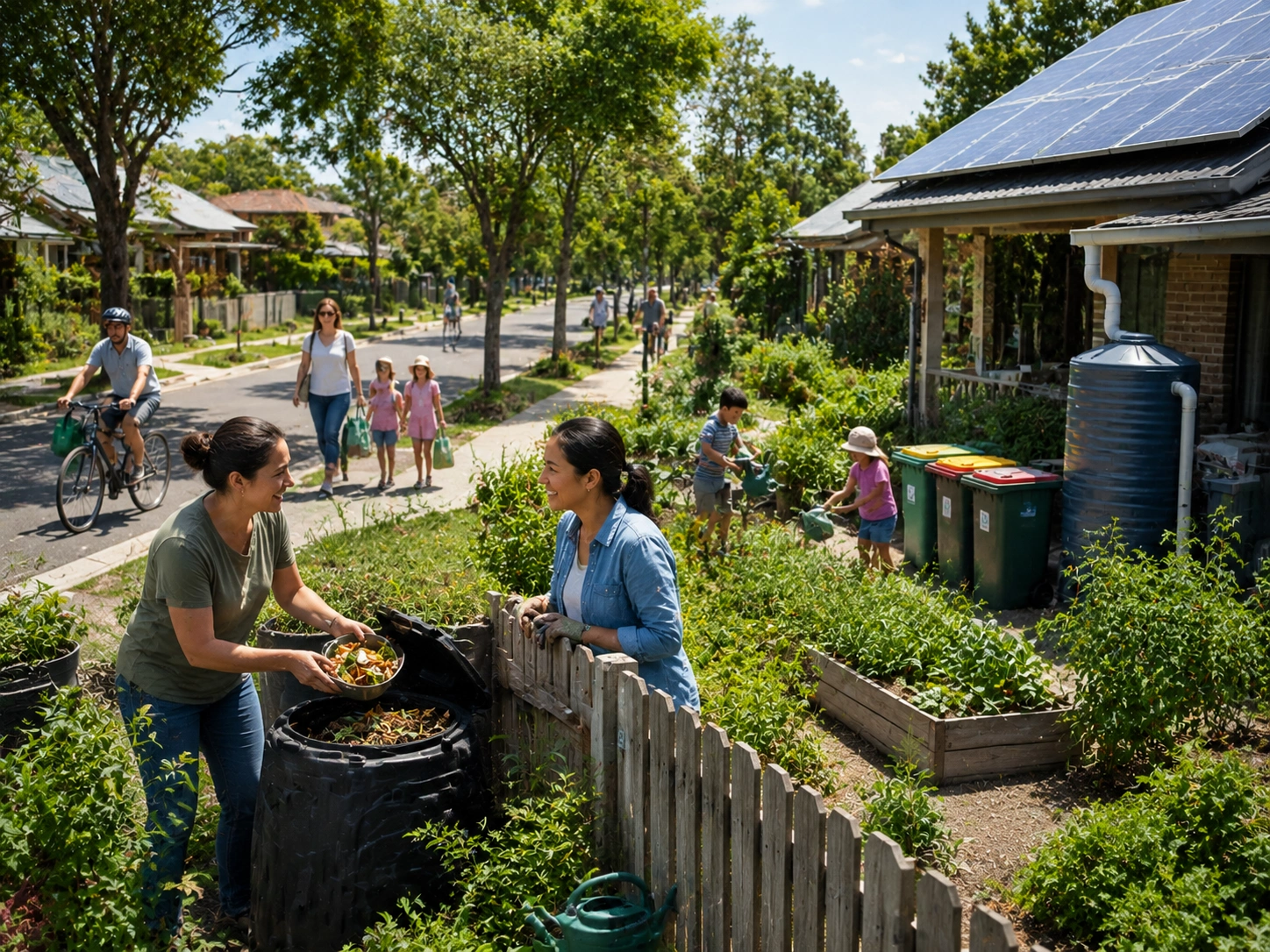
Most residents first notice sustainability efforts through small, visible changes nearby. For instance, a neighbour’s solar panels or a new recycling bin often sparks the first question. From there, curiosity tends to spread through local social networks fast.
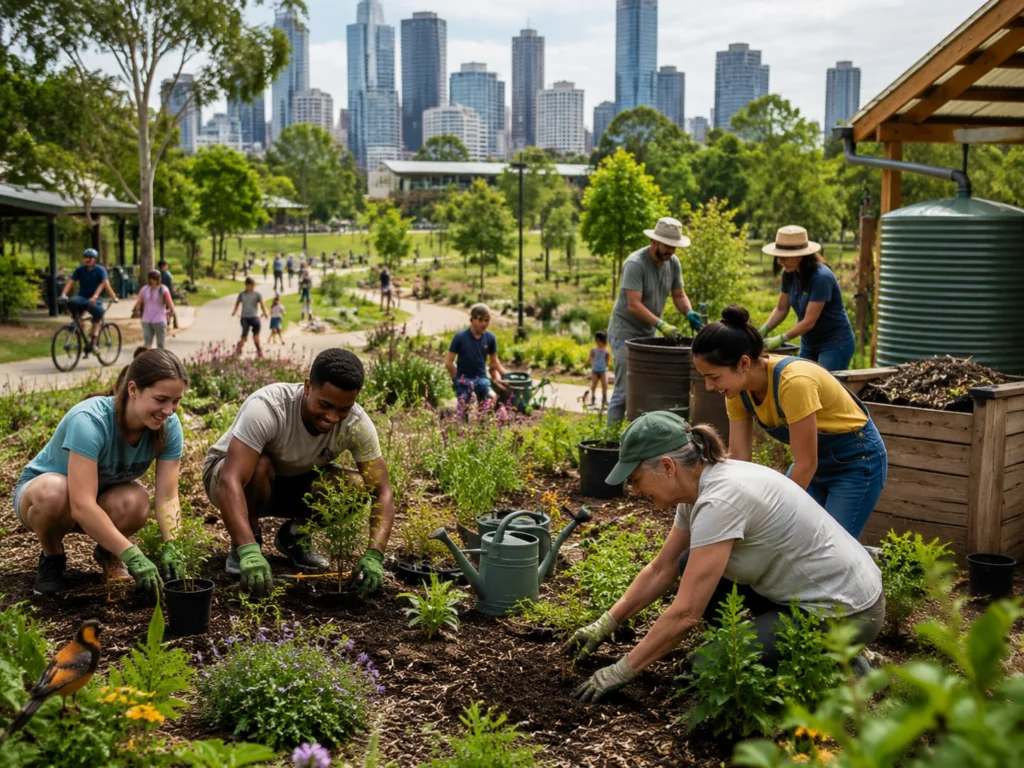
If you’ve ever seen a neighbour’s compost bin start a street-wide trend, you already know how this works. One household switches, and a few more follow within weeks. It doesn’t take a formal program to get that momentum going.
For the most part, small habits carry weight here, just as much as large projects do. Switching off unused devices, cutting back on plastics, or composting food waste all add up. None of it needs council approval to get started.
Practical Steps to Join a Local Project
A local project is usually easier to find. Council websites and community noticeboards list the most active programs, along with contact details for feedback or support. A quick search can show you local programs, grants, and sustainability initiatives.
In fact, small steps work just as well as joining something established. Say, a shared compost bin or a basic recycling plan can be enough to begin with. From there, most people decide to expand once they see the early results.
Either way, progress is easy to track without complicated tools. Simple measures like monthly power or water use show whether a plan is working. Also, councils welcome this kind of feedback when deciding on future funding.
Your Street Could Be the Next Ripple
Local sustainability projects start small, but they rarely stay that way. Solar panels, water recovery, and new local jobs all show the same thing. One town’s action can create lessons that other communities can use.
Most importantly, lasting impact depends on how communities act. Strong results often come from towns that commit to practical programs and improve them over time.
So, take a look at what’s happening in your own community. Check your council’s website or ask about current projects near you. Also, you can head to Eco4TheWorld to keep reading and find more ways to get involved.