
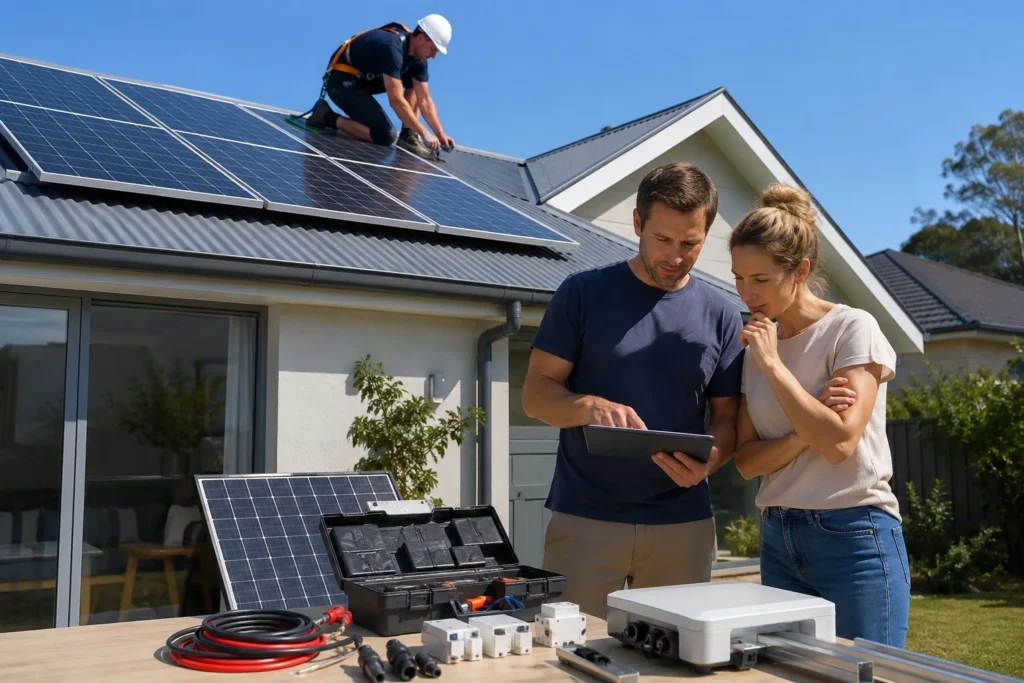
First-time solar panel buyers usually miss three things: inverter quality, installer credentials, and future energy needs. In fact, over 4.3 million Australian households now have rooftop solar installed, yet most people skip checking their actual electricity use.
Cheap solar systems cause the most problems in this case. Their inverters fail within 5-7 years, and installers without Clean Energy Council accreditation cut safety corners. As a result, undersized solar panels leave you paying peak grid electricity prices when you need power most.
This article will cover proper system sizing using real energy bills. We’ll also examine components installers don’t mention, and how financial incentives can slash costs by thousands.
Let’s look at what separates smart renewable energy investments from expensive regrets.
How Many Solar Panels: Sizing Your Home Renewable Energy System

Most installers recommend 6.6kW systems because that’s the rebate sweet spot. But in reality, your actual needs depend on daily energy consumption, roof space, and whether you’re planning electric vehicles or appliance upgrades within five years.
The sections below break down what your bills can reveal about energy use patterns.
Your Current Energy Bills Tell Half the Story
From our experience installing solar panels, analysing 12 months of energy bills shows you when you use the most power and electricity. This helps you decide between a larger solar system with battery storage or a smaller daytime-focused setup.
Say, a 6.6kW system generating excess power earns you only 4-8 cents per kilowatt-hour in feed-in tariff payments (that’s barely enough to cover a coffee). However, if you’re home during the day using solar energy directly, you can avoid paying 25-35 cents per kWh from the grid electricity supply.
Future-Proofing Your Home Solar Systems
Planning for electric vehicle charging adds 10-15 kWh of energy daily (that basically doubles most households’ current energy requirements). Along with EVs, replacing gas appliances with electric alternatives increases demand.
Factor in induction cooktops, heat pump hot water systems, and reverse cycle heating before finalising your solar system size. Not to mention, installers charge more for return visits because they need to reconfigure your existing system and update electrical work.
Which is why adding extra solar panels now pays off properly compared to retrofitting later when your energy needs inevitably grow. You’ll also lose power generation during upgrade periods down the track. That’ll impact how much electricity your system produces.
What Most Rooftop Solar Guides Don’t Mention About Components
Everyone talks about panel brands, but the components converting the power truly decide if your solar system will last 25 years or will need expensive repairs within a decade.
This is what installers won’t say about the parts that run your rooftop solar installations and renewable energy systems.
- Solar Inverters Convert DC to Usable Power: Solar inverters are where most solar PV systems fail first. On the other hand, quality solar inverters cost $1,500-$2,500 more upfront, but they last around 12-15 years and come with proper warranties.
- Monocrystalline Half-Cut Panels Handle Shade Better: These solar panels maintain power generation when tree branches shadow one section, unlike traditional panels losing significant output.
- Racking Quality Decides Cyclone Survival: Aluminium frames outlast galvanised steel in coastal humidity and high-wind areas. Steel usually rusts within 8-10 years near the ocean. As a result, panels can shift or detach during storms, and impact how your system generates electricity.
- Real-Time Monitoring Spots Problems Early: Monitoring apps display daily generation data and track energy produced from your solar panels and renewable energy systems. Besides, advanced monitoring alerts you when performance drops so warranty repairs can happen within coverage periods.
Choosing quality components over the cheapest options protects your renewable energy investment for decades. When installers cut corners on inverters, racking, or monitoring, you’re setting yourself up for expensive failures and lost generation time.
So, spend the extra upfront and avoid regrets later.
Can You Really Afford It? Financial Incentives Explained

Government rebates and financial incentives can slash installation costs by up to $5,000. This can make a $9,000 solar system become a $4,000-$6,000 investment with faster payback periods and lower energy costs.
Take a look at where the money comes from to reduce your energy bills.
Small-Scale Technology Certificates Reduce Upfront Costs
Your solar panel system generates certificates based on its size and location. Small-scale technology certificates provide a 30% discount on solar panels for a standard 6.6kW renewable energy system. Yet installers rarely explain how these solar rebate programs work.
Installers claim these on your behalf and pass the discount directly to you. To put it into perspective, a 6.6kW system in Brisbane generates around 90 certificates (learn more about STCs from the Clean Energy Regulator).
The catch is, certificate values drop every year as the solar rebate scheme phases out in 2030.
State Rebates Vary Wildly Across Australia
Victoria offers interest-free loans up to $1,400 plus matching financial incentives through their Solar Homes Program. You can check the Solar Victoria website for current programs.
In the meantime, Queensland focuses on battery rebates instead of solar panel rebates. New South Wales has also shifted to supporting virtual power plants and clean energy networks. These change annually based on Australian government budgets and energy policy.
Feed-In Tariffs Pay You for Excess Electricity
Feed-in tariff rates across Australia typically range from 3.4-6.5 cents per kWh in 2026 (installers hate when customers know this). Rates have declined significantly from historic highs as solar adoption and purchasing renewable energy have increased.
Back in 2012, some electricity retailers we know paid 44-66 cents per kWh for energy fed back to the electricity grid. That’s why battery storage and solar battery systems make more financial sense now. Instead of selling power cheaply, you can store it for evening use when grid electricity costs more per kWh.
Solar Panel Guide: Avoiding Expensive Mistakes
Installation mistakes often void warranties and reduce generation, which ultimately impacts how much energy your solar panels produce. Especially, poor roof assessments and unaccredited solar installers cause most problems with home solar systems.
Here’s what protects your investment beyond the purchase price of solar panels.
Rooftop Solar and Shade Assessment Before You Commit
Believe it or not, around 15-20% of our quoted solar panel installations get cancelled when structural inspections reveal roof problems the homeowner didn’t know existed.
Since solar installers won’t fix asbestos roofs. And replacements can cost almost $15,000-$25,000 before panels are even quoted. It’s important to get your roof inspected independently before requesting solar quotes.
In general, north-facing roofs generate more electricity than east or west orientations in Australian conditions (yes, even in cloudy Brisbane winters). West-facing solar systems work if you use most power in afternoons. Conversely, east-facing panels suit morning energy use patterns and power generation needs.
Pro Tip: Check for structural damage, missing tiles, or rust on metal roofs affecting energy efficiency. Also, consider that nearby trees will grow taller over time. And shade projections need 10-year growth estimates, rather than current coverage.
Choosing Clean Energy Council Approved Solar Installers

After reviewing installation failures for three years, accreditation is almost always more important than price. Clean Energy Council accreditation confirms solar installers meet safety standards. However, you still need to check their actual installation track record.
Ask for references from solar installations completed two to three years ago. Then call those customers directly. Did the system perform as promised? Did the solar installer respond to warranty claims promptly? These conversations reveal more about renewable energy systems than online reviews.
We suggest checking their ABN registration date on the Australian Business Register. Companies registered after July 2025 often set up specifically to take advantage of the government’s battery rebate scheme. They rarely have a long track record in renewable energy or home installations.
Start Saving With Solar Panels Today
Solar panels slash your energy bills when sized correctly and installed properly by accredited solar installers. Your roof orientation, component quality, and installer credentials decide if you’ll lower energy bills in four years or fourteen.
So don’t chase the cheapest quote. Those solar systems use Tier 3 panels and budget inverters that fail when you need them most. Our recommendation is to:
- Get three quotes from Clean Energy Council-approved solar installers
- Compare warranties line-by-line
- Verify their ABN registration dates
Want more practical guidance on sustainable living and clean energy? Eco4theWorld breaks down renewable energy systems and waste reduction strategies. You’ll find climate action steps that everyday Australians can implement for environmental benefits and lower energy bills.
Visit us to keep your energy costs from climbing.