
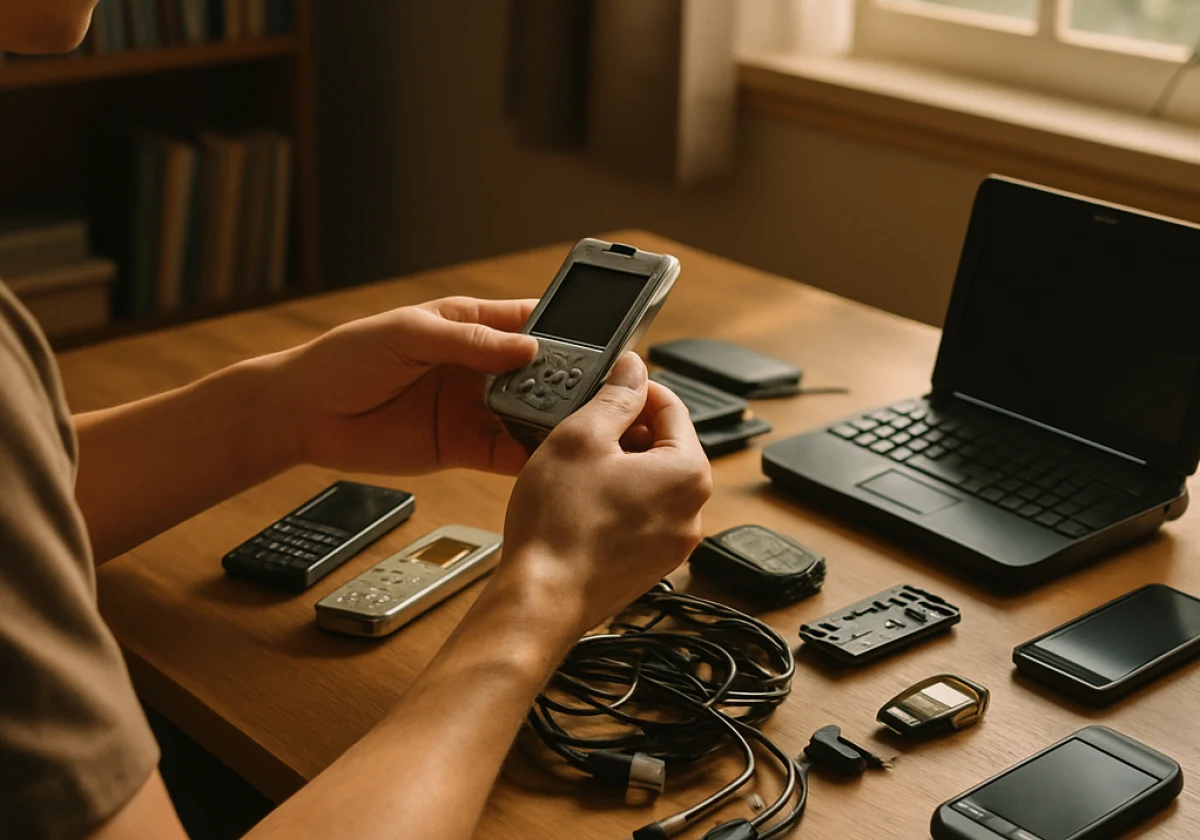
Before you buy new electronics, ask four environmental questions about repairability, energy use, materials and recycling options. The answers show whether a device will last six years or end up in a drawer after two.w
Product marketing rarely raises these questions. Ads focus on screen size and processor speed, not on what happens to a device after you stop using it. At Eco4TheWorld, we have found that a few pointed questions often change which model a shopper chooses.
This guide covers what to ask, how to read the answers and when buying nothing at all is the greener option. Let’s get into it.
Why Does Your Next Device Carry Such a Large Carbon Footprint?

Most of a device’s carbon footprint is locked in during manufacturing, well before it reaches a store shelf. The damage builds up in mines, smelters and assembly lines that buyers never see, from ore extraction to final testing. Spec sheets rarely mention any of it.
Three stages explain where that footprint comes from.
Where the Footprint Builds Up During Electronic Manufacturing
Manufacturing accounts for the largest share of a device’s footprint. Mining, refining and assembly consume energy, water and raw materials, and they release greenhouse gas emissions before you switch the unit on.
A single smartphone can contain more than 60 different elements, and each one is mined and processed separately (link a source, e.g., Royal Society of Chemistry).
Every extra element adds another supply chain with its own energy use and emissions. That is why building a device usually has a far larger impact than charging it for several years. Product packaging rarely mentions any of this.
The E-Waste Problem Sitting Behind Every Upgrade
You have probably got a dead phone in a kitchen drawer right now, and that drawer is where the e-waste problem starts.
The Global E-Waste Monitor counted 62 million tonnes of electronic waste in 2022. Formal recycling practices captured only 22 per cent of it.
Most of the rest went undocumented, ending up in landfills, informal recycling yards or shipments overseas. Those devices still held about US$62 billion worth of unrecovered metals such as gold, silver and copper.
How Much Does Daily Power Use Really Count?
Daily power use counts for less than most people assume, usually under a fifth of what a laptop costs the planet.
For most laptops and phones, daily power use makes up a smaller share of lifetime emissions than manufacturing. The exact share depends on how much coal powers your local grid.
Efficiency standards have pushed makers to cut power draw, so a current model uses less electricity than a decade-old equivalent. Even so, those savings rarely offset the emissions from building a replacement. Keeping your current device for longer usually cuts more emissions than upgrading to a more efficient one.
Repairability and Lifespan: Green Choices That Beat Built-in Obsolescence

Now that you know where the footprint comes from, the next step is keeping a device running for longer. Many gadgets fail because of a glued-in battery or a cracked screen, not worn-out chips. That makes repair access a better question than processor speed.
Run this quick check past the salesperson before you commit.
| Question to ask | Green light | Red flag |
|---|---|---|
| Battery replaceable? | Clips or screws | Glued in |
| Spare parts sold? | Public price list | Authorised repairers only |
| Update window? | Five years plus | Two years |
Verdict: a device you can open is easier to keep running. You can clear dust from the fans, replace a tired battery and swap a cracked screen without special tools.
Each repair adds years to its working life. Screws, instead of glue, are the clearest sign of a durable design. At Eco4TheWorld, the laptops we still use after five years are all the ones held together with screws.
Responsible Consumption at the Counter: Materials, Packaging and Recycling
Repair access is only half the picture. The materials inside a device, its packaging and the brand’s recycling options also affect how much waste it creates. Ask staff for the spec sheet, as most retailers can bring it up on screen within a few minutes.
Work down this short list while you’re still at the counter:
- Recycled Content: Some laptop housings now use recycled plastic or aluminium for up to half their weight (verify against a named model). Better brands publish the recycled-content percentage for each model, so ask to see that figure.
- Packaging Choices: Moulded paper pulp is easier to recycle than foam inserts. Compact packaging also lets more units fit on each truck, which cuts transport emissions.
- Take-Back Schemes: Ask whether the brand funds its own e-waste recycling or simply refers you to the local council tip. A genuine scheme names its collection partner, such as an approved co-regulator under the National Television and Computer Recycling Scheme.
- Hazardous Substances: Check whether the device complies with RoHS limits on lead, mercury and other restricted substances. Fewer hazardous materials mean less toxic leaching when the device reaches the landfill.
Tip: Note the four answers on your phone and compare your two shortlisted models side by side. A brand that answers all four without hesitation usually has genuine sustainability practices behind its marketing. Keep the notes for your next purchase too, since the same questions apply to any device.
Sustainable Electronics Buying Is Easier Than the Consumer Electronics Industry Lets On
Once you know what to ask, applying the answers takes less effort than the marketing suggests. It comes down to three habits rather than technical knowledge of chips and batteries. Each habit below takes only a few minutes before you buy.
These three habits carry most of the weight.
Reading Energy Ratings: How to Spot Eco-Friendly Technology Without the Jargon
Energy rating labels on Australian appliances compare similar models, so a six-star fridge beats a three-star one of the same size.
EPEAT ratings cover repairability, recyclable design and hazardous substances, while ENERGY STAR focuses on power use alone. Each is harder to fake than a green slogan on the box.
A brand’s support page usually lists its certifications, so check it before you visit the store.
When Secondhand or Refurbished Beats Buying New
Secondhand or refurbished gear is the better choice whenever it covers your needs. Reusing existing hardware avoids most of the manufacturing footprint and the mining behind it.
For example, a three-year-old laptop can still handle email, study and streaming with ease. It often sells for around half the price of a new model.
Before you pay, ask the seller for the battery health and cycle count. Most of our own machines came through refurbishers, and these two figures told us how much life each one had left.
Questions to Put to Brands About Circular Economy Claims
Ask companies to name the scheme, the volume and the year whenever they mention the circular economy. On its own, the phrase proves nothing.
A solid answer names a take-back programme with published tonnes collected, a modular design across a product line or a trade-in scheme.
Vague answers are a warning sign in themselves. Brands with genuine sustainable manufacturing practices rarely avoid a follow-up question, and their silence often says more than the brochure.
Buying Less, Buying Better
Buying less and buying better do more for the planet than any green slogan on the box. Responsible buying starts with the questions you ask before you pay. One device used for six years creates less waste than two devices used for three years each.
Take these questions with you to your next purchase, and you will cut your own e-waste before it even starts. Most staff can answer them, and a salesperson who cannot has told you something useful anyway.
Ready to make lower-waste buying a habit? Explore Eco4TheWorld for practical guidance on responsible consumption and lower-waste living.