
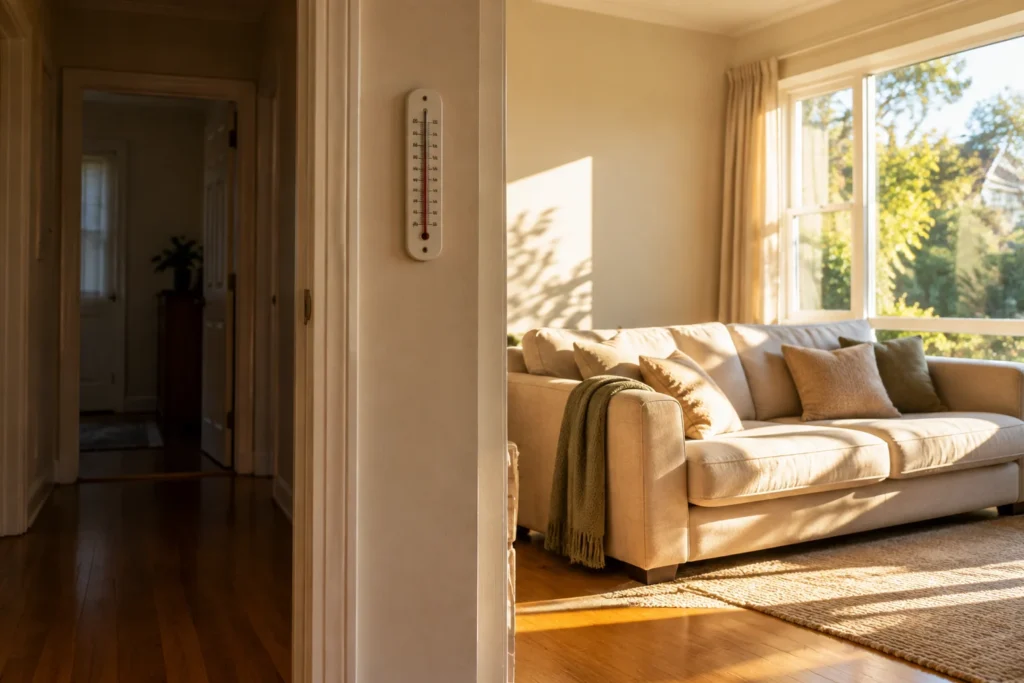
If one room feels like a sauna while the rest stays cool, your household is losing energy through gaps, poor insulation, or inefficient equipment. Your heating and cooling system ends up compensating for those weak spots, and the extra effort shows on your energy bills every quarter.
Here at Eco4theWorld, we help Australian families build everyday energy-saving habits that reduce costs without expensive upgrades. This guide walks you through draughts, direct sun, appliance ratings, and the daily energy use patterns that push your bills higher.
How Draughts at Home Create Hot and Cold Spots
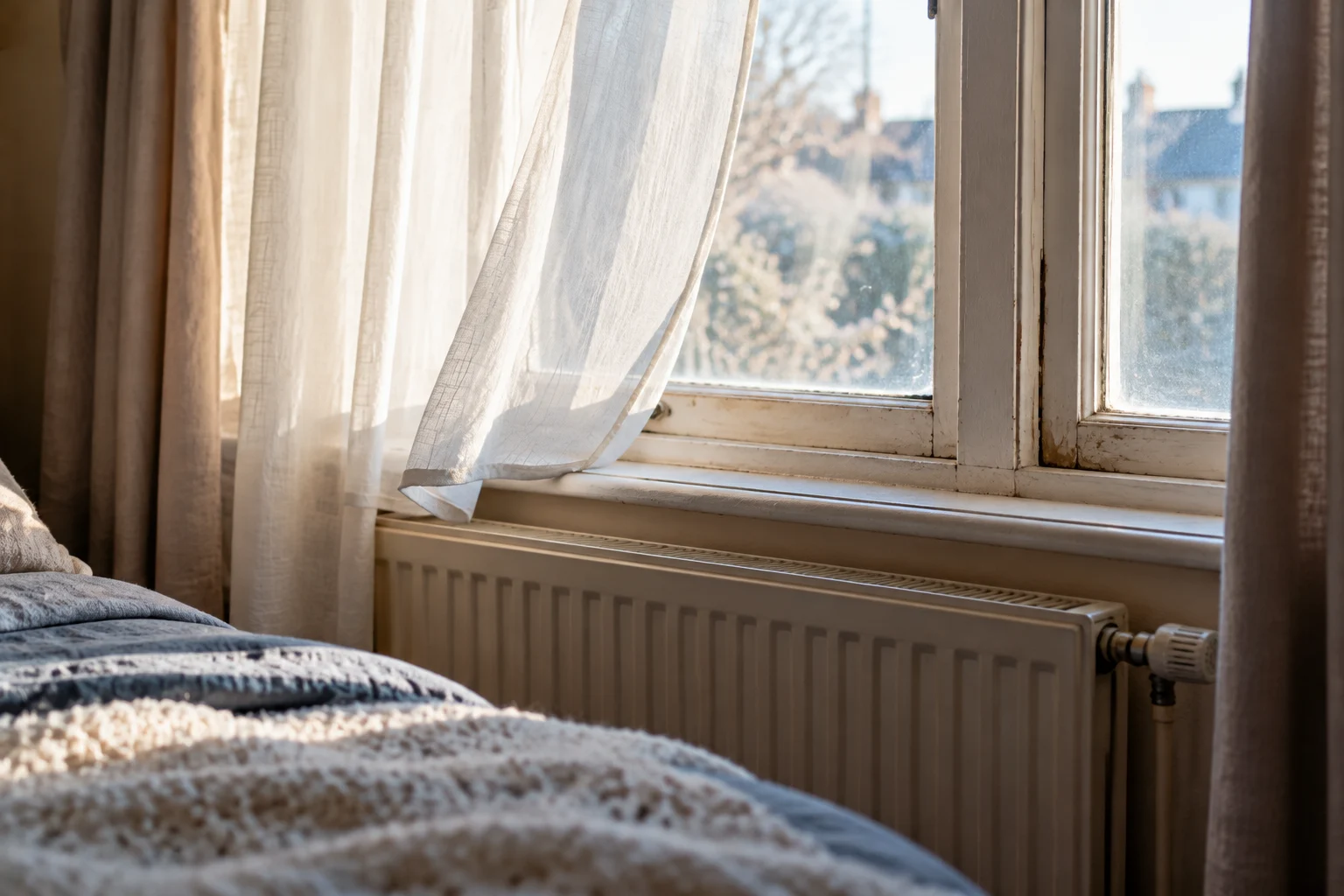
If one room always feels colder or warmer than the others, outside air is probably sneaking in through gaps you haven’t noticed. Your heater or cooling system then works harder to compensate, and that extra electricity cost shows on every bill.
Cold air pushes in during winter and warm air follows in summer, so your household energy efficiency takes a hit all year round (your AC is working overtime for nothing).
According to the Australian Government’s page on insulation and draught proofing, up to 25% of heating energy can escape through gaps in ceilings, walls, and floors alone. And you’d be surprised where most of these draughts hide.
Where Draughts Hide in Most Homes
Doors, windows, floorboards, and exhaust fans are the usual culprits. Older homes tend to be worse because seals crack and shrink with age. A wooden window frame, for example, only needs to shift a couple of millimetres before outside air pushes straight through.
A Free Way to Find Them Yourself
Once you’ve checked those spots, grab a candle or incense stick and hold it near the edges and any nearby power points. If the flame flickers or the smoke drifts sideways, you’ve found a draught.
From there, you can block draughts with foam tape or draught stoppers for under $10 each, and your system won’t have to burn through as much power to keep the room comfortable.
Close Curtains and Manage Direct Sun to Cut Energy Use
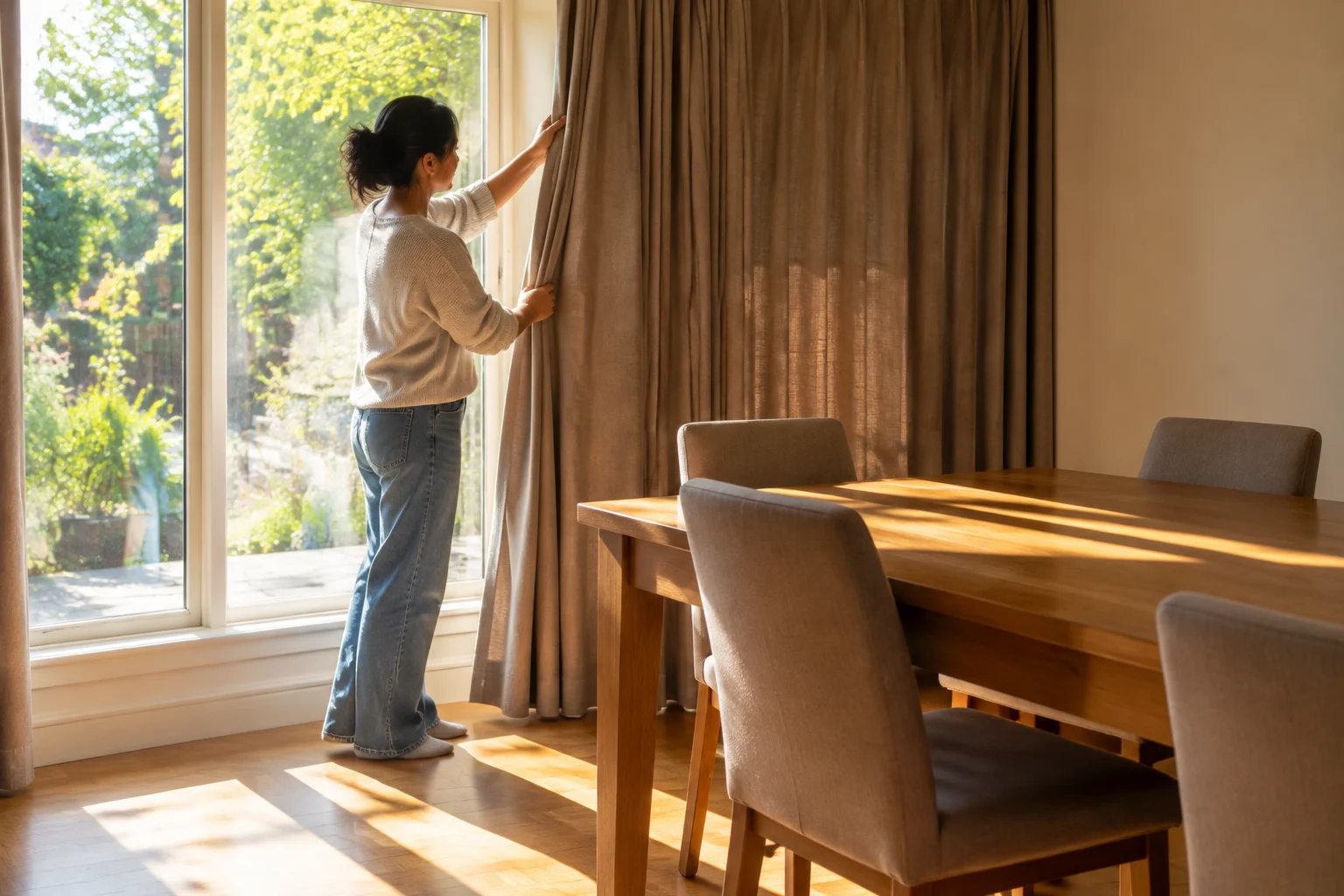
Even something as simple as a pair of thick curtains can drop a room’s temperature by up to 5 degrees on a hot afternoon, all without touching the thermostat. Your cooling system runs less as a result, and your electricity bill shrinks with it.
We’ve written about dozens of Australian households dealing with this exact issue, and it’s the same story every time. The north and west-facing rooms cop the worst afternoon sun and lose most energy through the glass during summer. That heat builds up inside, and your system burns through power trying to cool it back down.
Outside the house, shading like awnings or a well-placed tree blocks heat before it reaches the glass, so even less energy goes toward cooling. A decent set of blockout curtains costs around $50 to $80 per window and pays for itself within two billing cycles, while also cutting your household emissions.
Once you’ve looked at draughts and sun exposure, the next place to check is your equipment.
What Energy Rating Labels Say About Energy Efficient Appliances
A heater from 2010 and one from 2024 can look almost identical but cost completely different amounts to run (that’s money draining every quarter).
Every appliance in your home should have an energy rating label showing how much electricity or gas it uses per hour. The scale runs from 1 to 6 stars, and the more stars you see, the lower the running costs.
You’ll find these labels on heaters, washing machines, heat pumps, and other appliances, and the Australian Government requires them on most energy-efficient appliances sold here. You can compare what you own against newer models in just a few minutes.
| Appliance | 2-Star Running Cost | 5-Star Running Cost | Average Yearly Saving |
| Reverse-Cycle AC | $610/year | $380/year | ~$230 |
| Gas Heater | $520/year | $340/year | ~$180 |
As the table shows, the range between a 2-star and 5-star appliance means real savings on your energy bills each year. If you’re not ready to upgrade just yet, switching to a better deal with your retailer will still reduce your electricity costs.
Either way, checking those energy rating labels helps you decide what you pay for and where to save energy.
Heating and Cooling Habits That Inflate Your Energy Bills
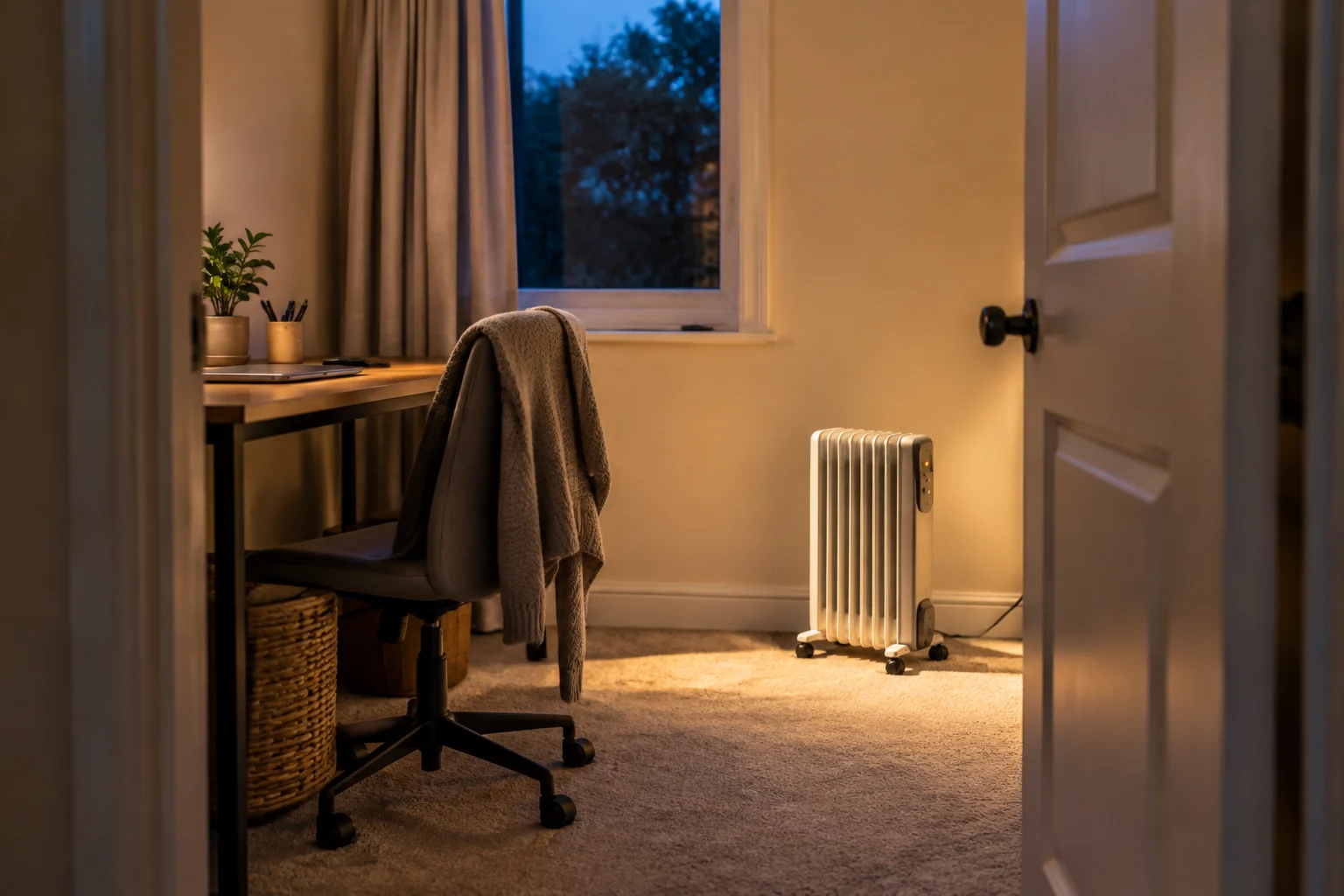
From there, your daily habits come into play. One thing we keep seeing in reader questions is households running their heating and cooling in every room, even the empty ones. That wasted energy use can cost the average family over $200 a year, and most of it is avoidable.
Here are the ones worth fixing first.
- Heating Empty Rooms: If your heating or cooling systems run while no one’s home, you’re paying for comfort nobody enjoys. Most of us do this without even thinking about it. Set timers or zone your system so it only heats or cools the rooms you’re actually in (even one or two degrees makes a difference).
- Overlooked Energy Drains: Pool pumps, cooking equipment, cold water washing machines, and electric vehicles charging overnight all spike your household energy consumption. If you’ve got rooftop solar, solar panels, or battery storage, make sure your solar hot water system is helping offset those running costs.
- Stale Retailer Deals: Energy retailers and small businesses update their plans each year. The average family can save money by switching to a better gas and electricity deal, so it pays to compare at least once a season.
Start saving with the room that has the worst temperature gap, switch off unused appliances at the power point, and build your energy-saving routine from there. Those changes save power, reduce costs and emissions, and free up money for more energy-efficient upgrades.
Quick Note: The Australian Government’s page on heating and cooling at home breaks down where most energy goes and how to reduce your electricity bills.
Reducing Energy Costs Through Smarter Energy Saving Habits
You don’t need a full renovation to improve comfort and reduce costs at home. Draught strips, curtains, timers, and a quick check of your energy rating labels can make your household more energy efficient within a week.
If you’re having trouble paying energy bills, it’s worth checking with the Australian Government for rebates and incentives. Those can help cover installation costs for battery storage, feed-in tariffs, and equipment that lets you store energy at home, so look for the best deal in your state before locking in any plan.
Head over to Eco4theWorld for more guides on cutting your energy costs and keeping your home comfortable all year. Your comfort and the planet will both be better for it.