
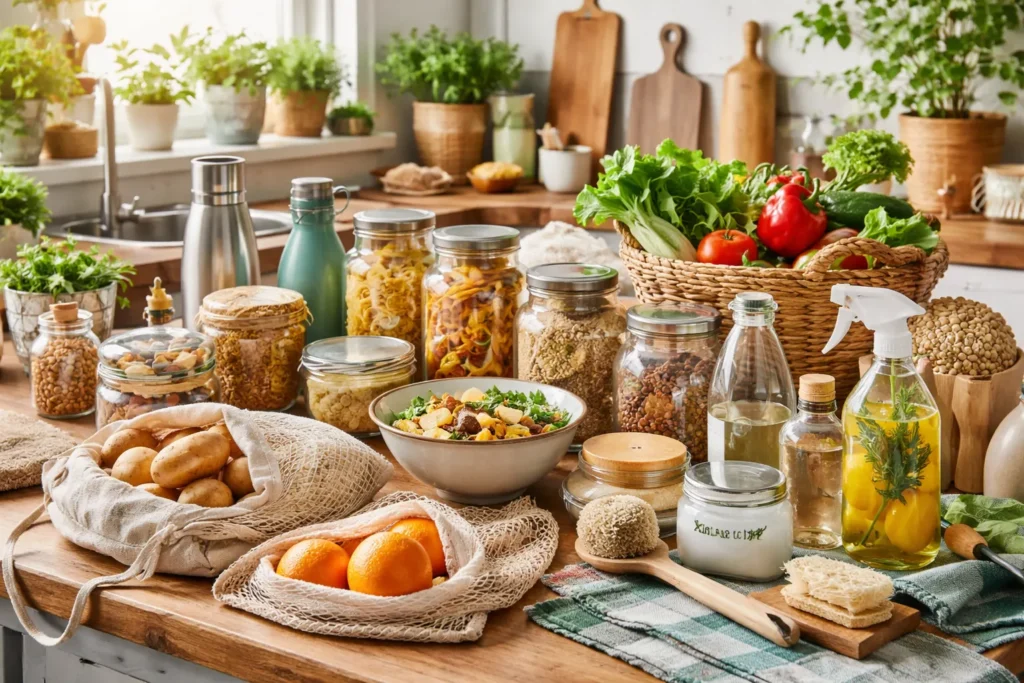
Eco-friendly living on a budget starts with six simple changes: preventing food waste, switching to reusable bottles, making sustainable kitchen swaps, repurposing household items, creating DIY cleaners, and building daily habits. Unfortunately, most people skip these because they assume green living costs more.
Well, that’s a big misconception. Your kitchen drawers and cupboards already hold what you need to cut waste and save money. For instance, glass jars you’d normally bin become free storage and old shirts cut into squares replace paper towels. You’re simply repurposing instead of purchasing.
In this guide, we’ll walk you through each swap step by step. You’ll learn exactly how to stop wasting food, ditch single-use plastic, make your own cleaners, and build habits that stick.
Let’s get started.
Use What You Have: Save Money in Your Kitchen
Australian households throw away 2.5 million tonnes of food each year because we forget what’s in the fridge. Believe it or not, preventing this waste is one of the fastest ways to save money. Here are three methods that immediately reduce food waste:
- Store Leftovers in Mason Jars: Clear glass jars let you see exactly what leftovers need eating first. Once you can see everything, label each jar with the date and arrange older items at the front so nothing gets buried and forgotten.
- Plan Meals Around What’s Expiring: Before you write your shopping list each week, scan everything in your fridge and pantry. When you spot vegetables starting to soften, throw them into stir-fries or soups. You could also turn overripe bananas and berries into smoothies that your kids will love.
- Buy Only What You’ll Use: We recommend that you start with smaller amounts of fresh produce until you know your household’s real eating patterns. The good part is you can always buy more next week. But you can’t recover food that’s already spoiled in your bin.
These habits cut food waste and save you heaps of money. Want to save even more? Let’s look at what you’re spending on bottled water.
Ditch Plastic Bottles Without Spending a Fortune
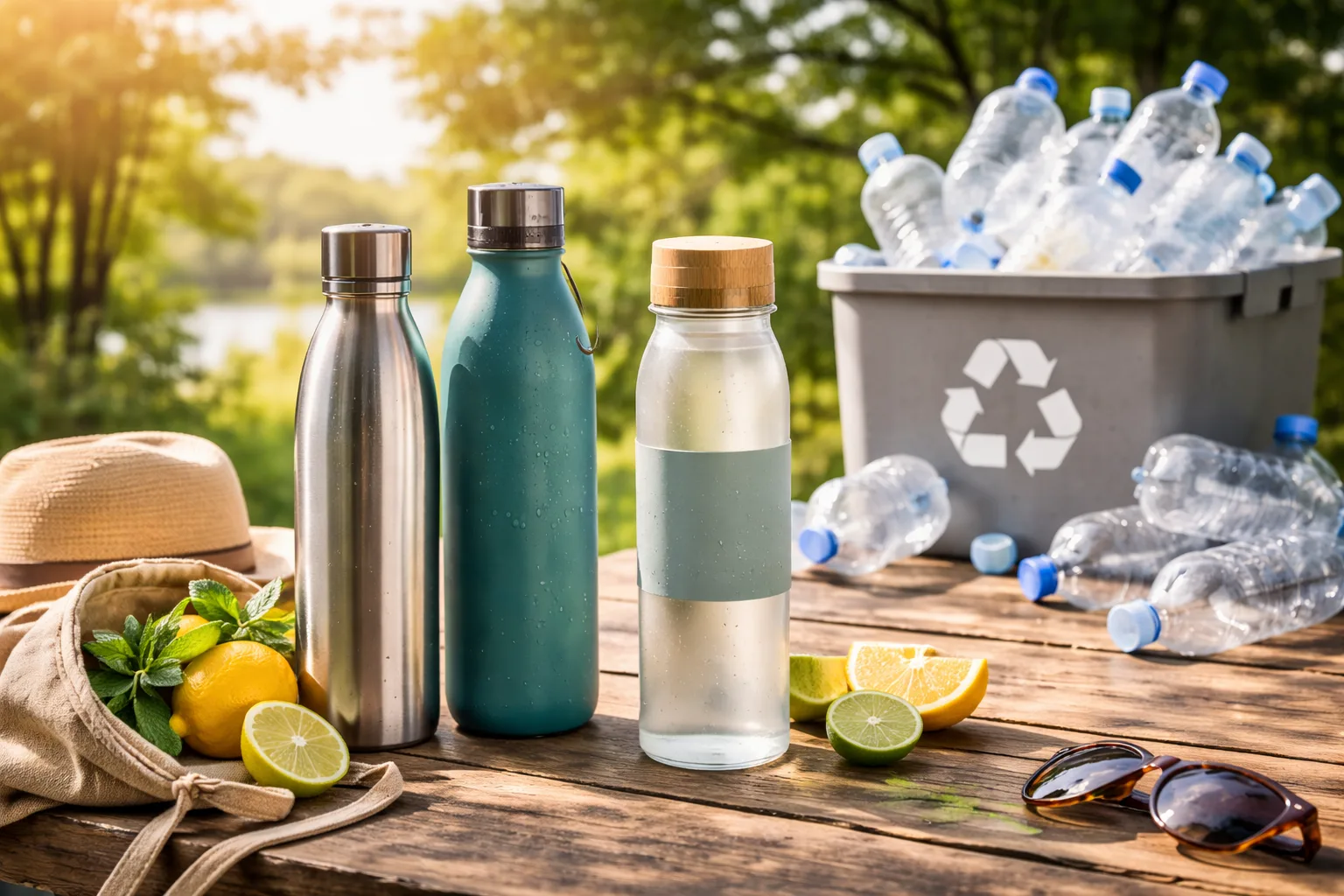
Most Australian households spend considerable money on bottled water that a simple reusable bottle would eliminate. Switching to reusable saves money while cutting plastic waste at the same time. Let’s look at the breakdown.
| Item | Monthly Cost | One-Time Cost | Payback Period |
| Bottled water | $40–60 | — | — |
| Reusable water bottle | — | $15–25 | 2 weeks |
A reusable bottle pays for itself in roughly two weeks, then it’s pure savings from there. What makes this easier is that tap water in most Australian cities is safe to drink and costs almost nothing. Cities like Sydney, Melbourne, and Brisbane meet strict safety standards without the packaging waste or price tag.
Want a zero-cost option? Glass jars from old sauce bottles work, too.
Bottles are just one swap, though.
Sustainable Swaps That Cut Your Carbon Footprint
Most of us toss paper towels, plastic bags, and containers that sustainable swaps could replace for almost nothing. These changes cut your carbon footprint while costing next to nothing, starting with three simple swaps.
1. Kitchen Swaps
Bar dish soap lasts three times longer than liquid versions in plastic bottles because it’s concentrated soap without added water. One $5 bar cleans dishes for three months while cutting both plastic waste and shopping costs.
2. Cleaning Swaps
Beyond the kitchen, old t-shirts cut into squares work for almost every cleaning job around your house. Once you wash them with your regular laundry, they’re ready to replace paper towels over and over without spending another dollar.
3. Shopping Swaps
Your next swap happens before you even enter the shops. Keep reusable bags in your car boot so you’ll remember them (because who remembers otherwise?). We suggest you keep four bags behind your back seat, then wash them monthly in hot water to keep them fresh.
With sustainable swaps out of the way, let’s look at what you can do with items you’d normally bin.
Budget-Friendly Solutions from Household Waste
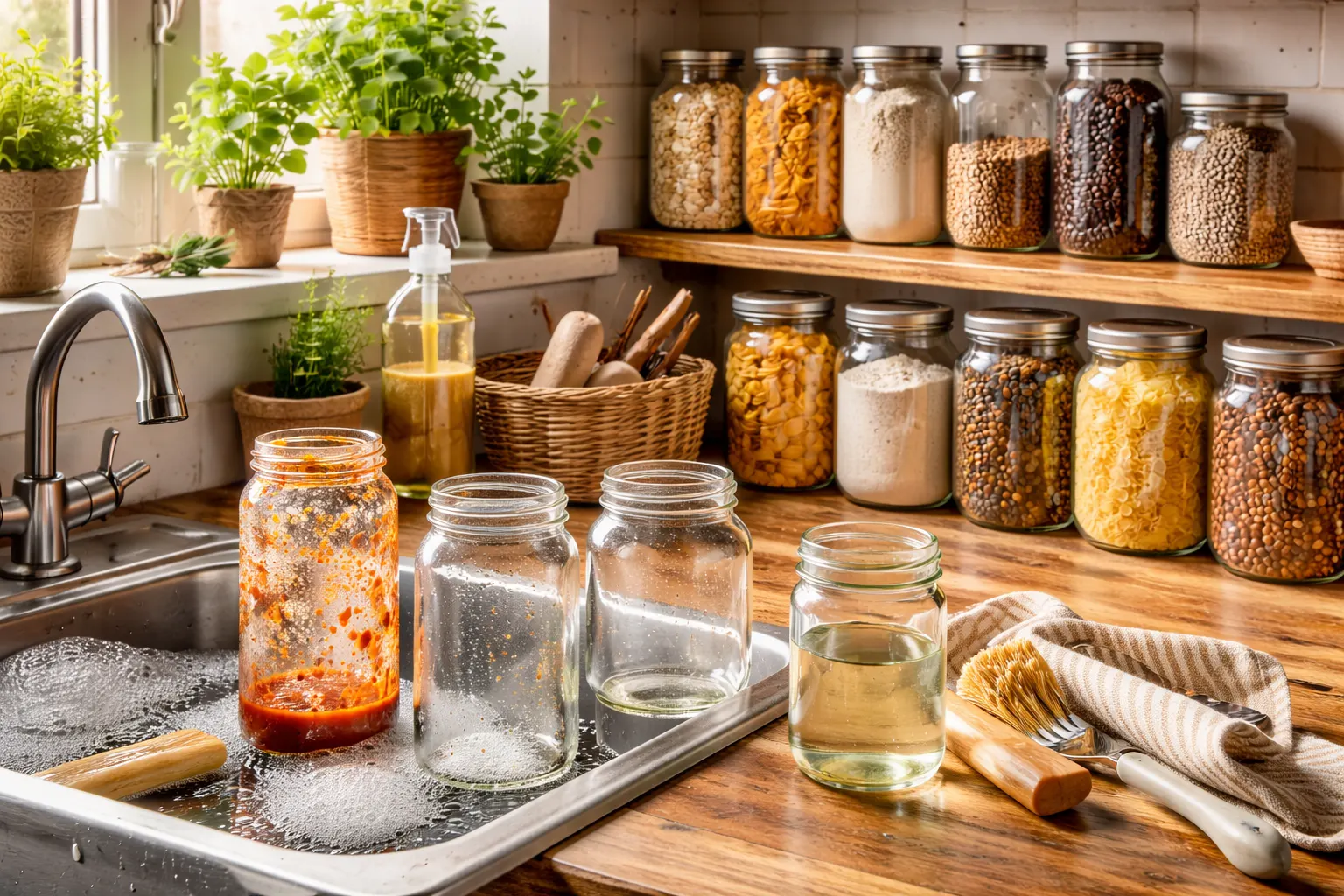
You probably toss away glass jars every week. The very thing that could organise your pantry for free. Once you finish that pasta sauce, wash the jar and use it to store rice, flour, or coffee. The reason this works is that clear glass shows when supplies run low, and tight seals keep everything fresh.
Beyond jars, old newspapers replace wrapping paper and pad fragile items. Once you’re done, they shred easily for compost or clean windows, so one stack handles multiple tasks without buying anything new.
Vegetable scraps become homemade stock instead of household waste. After trying this for three months, we’ve saved $15 monthly. The method is simple: save onion skins, carrot tops, and herb stems in a freezer bag, then simmer with water for an hour.
These repurposing habits save money while keeping useful items out of landfills. After sorting your storage and food scraps, your cleaning products are the next area to tackle.
Make Your Own Cleaning Products for Less
Store-bought cleaning products cost $50 monthly, but homemade versions cost under $10 yearly. What’s more, making your own takes five minutes and uses ingredients you already have at home. The simplest recipe needs only three items.
All-Purpose Cleaner:
- Mix a cup of vinegar and a cup of water in a spray bottle
- Add 2 tablespoons of bicarb soda for scrubbing
- Optional: 10 drops of eucalyptus oil for scent
Frankly, the chemical smell in store cleaners should’ve been our first warning sign that something was off. The homemade version works just as well on kitchen benches, bathroom tiles, windows, and floors, but without any harsh chemicals involved. The best part is that one batch barely costs $3 and lasts three months.
Kitchen sorted, cleaning sorted. Now, for the plastic items you’re already using that don’t need replacing at all.
Go Plastic Free with What You Already Own
Let’s be honest, single-use plastic shows up everywhere: takeaway meals, shopping trips, and food storage. There are three things you already have at home that can replace all of them.
- Metal Cutlery: A set kept in your car or bag means you never need disposable forks when eating takeaway. Each time you use your own cutlery, you eliminate plastic waste from that meal.
- Cloth Bags: One folded bag in your pocket prevents checkout panic at the shops. These bags hold more weight than plastic, last for years without tearing, and help you avoid purchasing new bags each visit.
- Beeswax Wraps: You can make these from old fabric you’d normally throw out. Based on our firsthand experience, we cut worn tea towels, melted beeswax pellets for around $10, and made wraps that’ve lasted eight months. They wash clean in cold water between uses.
These swaps use items you own while cutting waste. Small daily habits add up next.
Small Changes That Keep You Environmentally Friendly
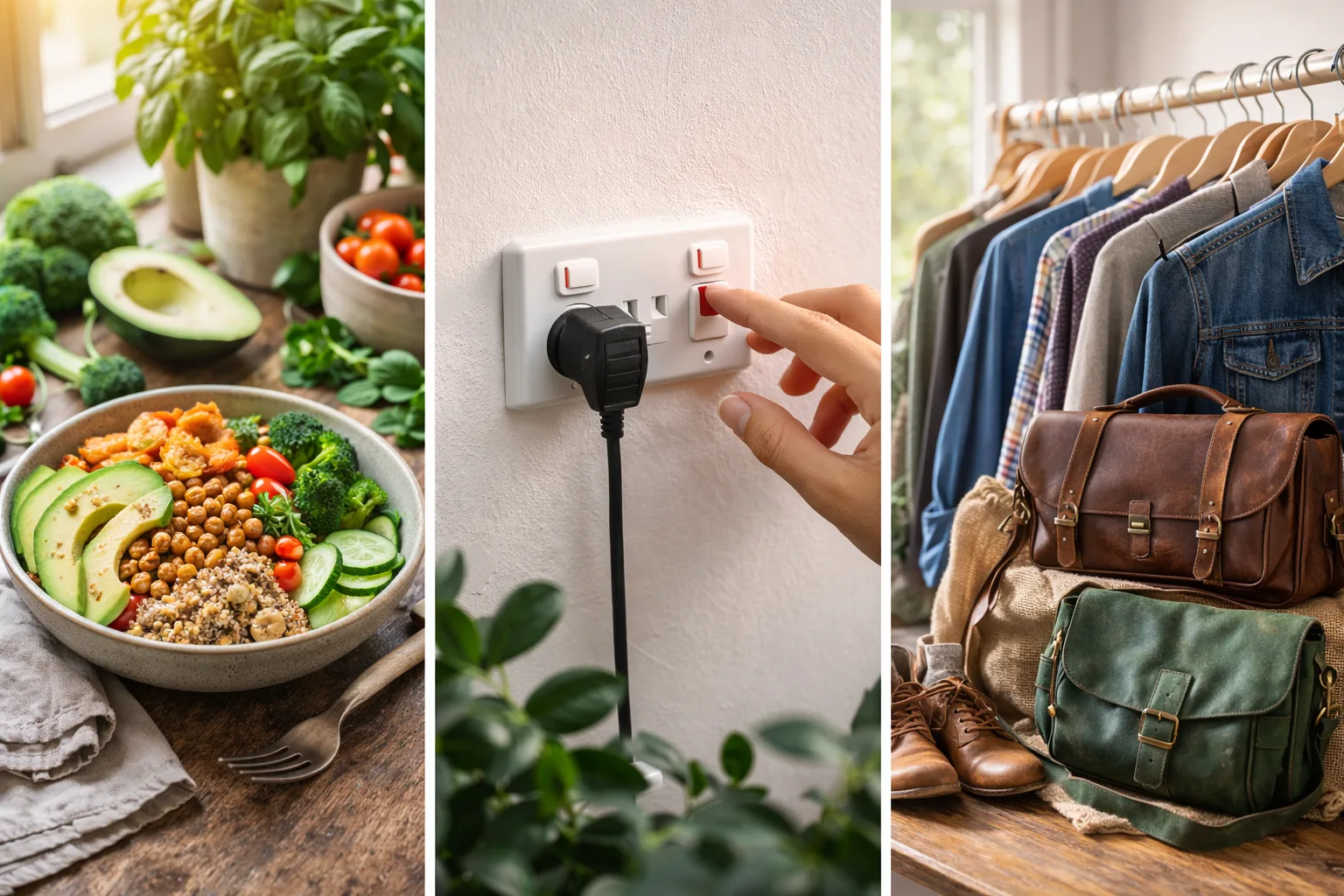
Three small changes keep you environmentally friendly without feeling like work: eating plant-based food, switching off appliances at the wall, and buying secondhand first. These habits save hundreds and reduce your environmental impact.
- Meatless Monday: One plant-based day weekly saves $3-$5 on meat per meal, which adds up to $150-$250 yearly. We suggest you swap mince for lentils in bolognese, use chickpeas in curries, or make bean tacos that cost half what meat versions do while cutting your carbon footprint.
- Switch Off Appliances: Standby power costs Australian households $100-$200 yearly for devices that are on but still draw electricity. Take our advice and use power boards for your TV setup, home office, and kitchen appliances. This way, one switch cuts power to everything at once instead of unplugging individual items.
- Buy Secondhand First: Gumtree and Facebook Marketplace sell furniture for 40-60% off retail, clothes for $5-$15 per item, and electronics at half price or less. Before making your purchase, check listings on them to find barely-used items from people upgrading or moving who need quick sales.
These simple energy-saving and shopping habits become automatic within weeks while saving money. Now let’s bring everything together.
Make Sustainable Swaps Work for Your Wallet
Sustainable living on a budget comes down to using what you already own instead of buying new products. The swaps we’ve covered require minimal effort but deliver real savings while reducing household waste.
In this guide, we’ve covered preventing food waste, ditching plastic bottles, and making sustainable swaps throughout your kitchen. You’ve also learned to repurpose household items, create DIY cleaners, and build daily habits that cut costs while reducing waste.
Start with one swap this week and track your savings as you go. When you’re ready for more guidance, our team at Eco4TheWorld will take you through every practical step you need to build lasting sustainable habits.
Your wallet and the planet will thank you.