
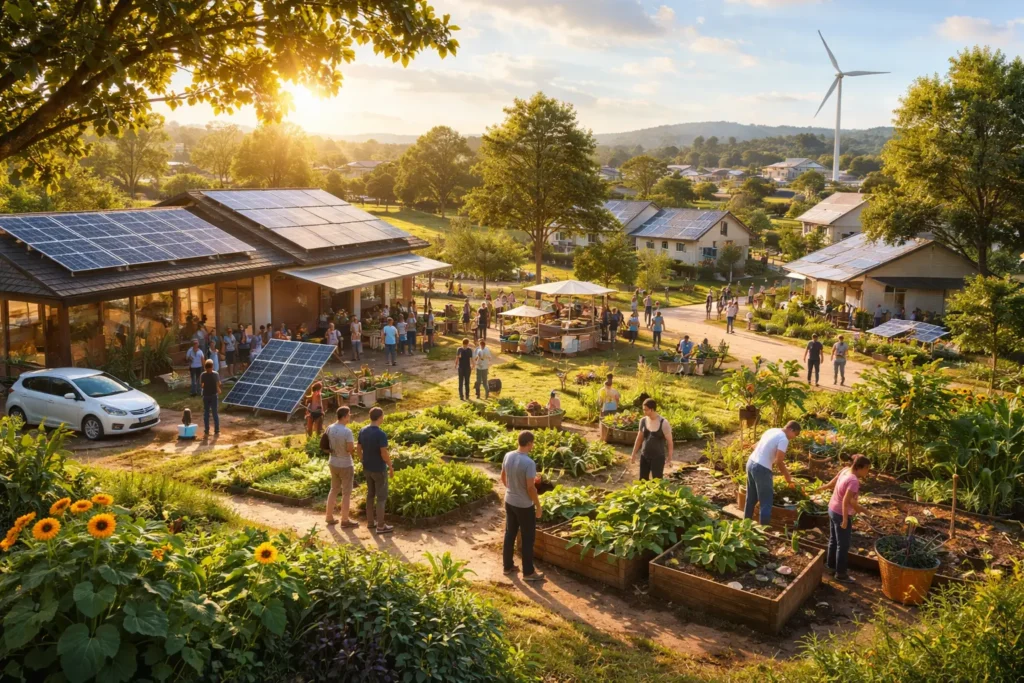
Communities reduce carbon footprints fastest when they pool resources, back local projects, and hold councils accountable together. No single household can match that kind of collective power. And across Australia, the results are already proving it.
The truth is, individual action has limits. You can switch off lights, compost your scraps, and ride your bike to work. But without collective effort, the bigger sources of emissions barely budge. Community programs, shared energy solutions, and local projects fill that gap and push real change forward.
This article walks you through the practical side of community sustainability, covering shared renewable energy programs, local eco projects, greenhouse gas reduction strategies, and council advocacy. And yes, we cover exactly how to get started, too.
Let’s get into it.
Why Community Action on Climate Change Beats Going It Alone
Climate change is a large-scale problem, and because of that, large-scale responses are what successfully move the needle. When your whole street, suburb, or city gets involved, the results land in a completely different league.
Let’s break down why that gap exists and what fills it.
The Limits of Going Solo
Individual action is a good start, but it has a ceiling. One person switching off the lights or avoiding single-use plastic saves energy and reduces waste. But those gains stay small without broader support behind them.
And without that community backing, even the most committed household can’t push change past their own front door.
What Changes When a Community Gets Involved
When a group of people takes action together, the benefits multiply. For instance, shared programs lower costs for everyone, and collective purchasing power opens doors that individuals can’t access on their own.
On top of that, community pressure on local government drives real policy change. It also builds social connections and improves local well-being in ways that going solo never could.
So now that we’ve covered why going solo has its limits, let’s look at what your community can actually do day to day.
Simple Ways to Reduce Your Carbon Footprint as a Community
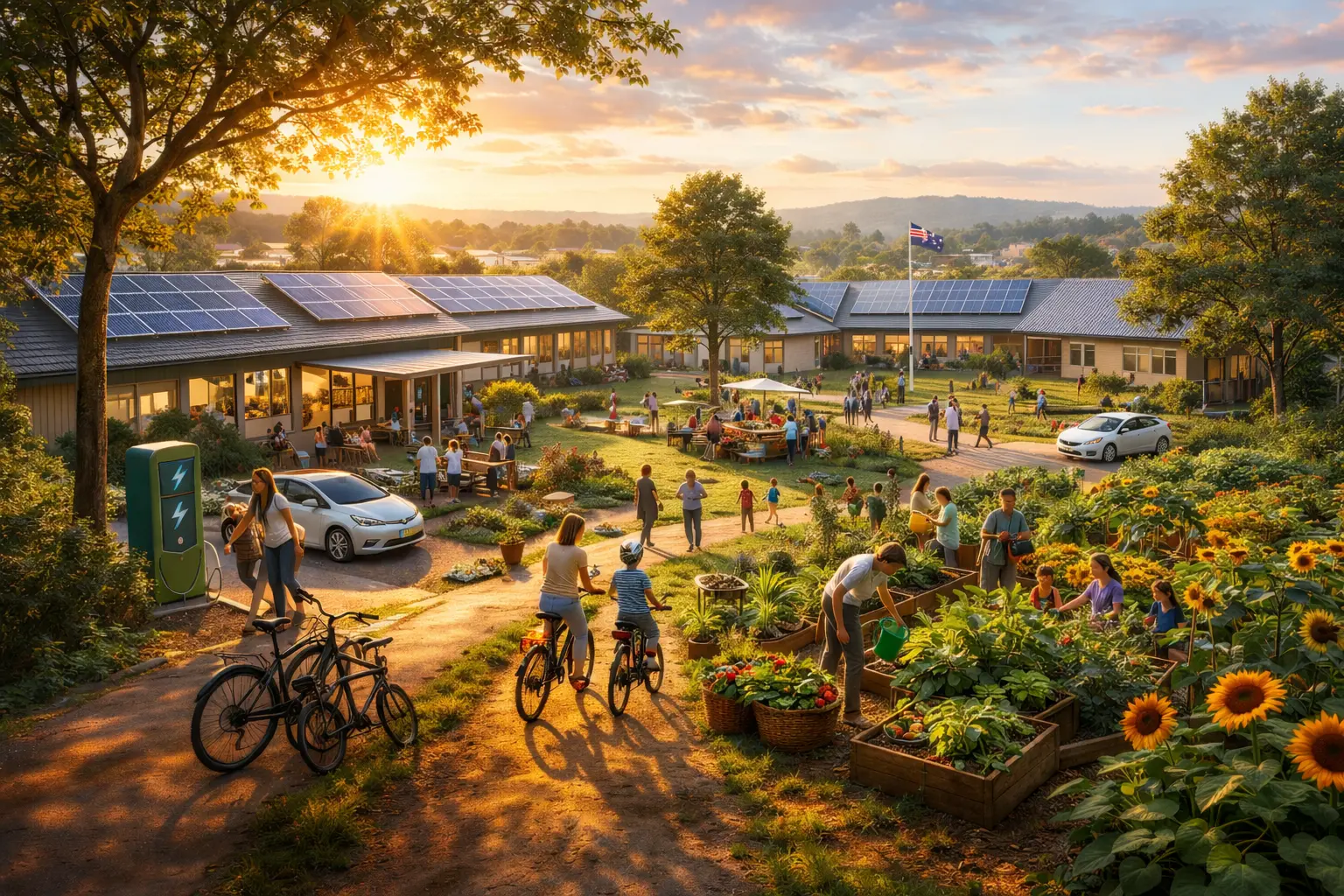
Cutting your community’s carbon footprint saves money, reduces emissions, and improves local well-being all at once. Apart from that, small, consistent changes across a neighbourhood add real weight to Australia’s broader climate change response.
Start with these:
- Public Transport: Switching to public transport as a community removes thousands of car trips from local roads each year. Basically, fewer cars means lower greenhouse gas emissions, less traffic, and real savings on fuel costs for households across the board.
- Community Composting: When a whole street gets behind a shared composting program, tonnes of organic waste stop reaching landfills annually. According to NSW Climate Change, community-led waste projects are among the most practical ways to reduce a neighbourhood’s environmental impact.
- Community Gardens: Believe it or not, a community garden not only grows tomatoes. But it chips away at food miles, cuts packaging waste, and gives your neighbourhood a shared space worth caring about.
- Group Home Energy Audits: Organising energy audits across multiple houses at once helps residents identify heating and cooling losses together. When people see the same problems showing up across the street, it builds real motivation to fix them collectively.
When an entire community moves in the same direction, the results go well beyond what any single household could achieve on its own. Next up, let’s look at the existing eco projects across Australia.
Local Eco Projects Already Running Across Australia
Australia has hundreds of community-led eco projects running right now across every state. Most started with just a small group of locals who decided to do something about it. What’s interesting is that some of these projects have been running for over a decade, but most Australians have never heard of them.
Here’s a look at what’s already happening on the ground.
Project | Location | Type | Outcome |
National | Tree Planting & Carbon Offsetting | Over 6 million trees have been planted across degraded land | |
Sustainable Street Program | Melbourne, VIC | Neighbourhood Sustainability Action | Reduced household emissions across participating streets |
Western Australia | Community Climate Solutions | Supports local groups reducing emissions across WA | |
Garage Sale Trail | Sydney, NSW | Community Reuse and Waste Reduction | Diverts thousands of items from landfill annually |
Do these projects need a massive budget? Not at all. Tree planting programs protect nature and restore degraded land with relatively low costs. Meanwhile, reuse projects like repair cafes and swap events cut waste reaching landfill each year.
And here’s something worth knowing: many of these initiatives attract funding once they demonstrate real results. When locals show up organised and consistent, councils and state governments take notice. That funding is what helps a project grow well beyond a single street.
Running a local eco project is a strong start. Shared renewable energy programs take that community momentum even further, and they’re gaining serious ground across the country.
Shared Renewable Energy: How It Works for Communities
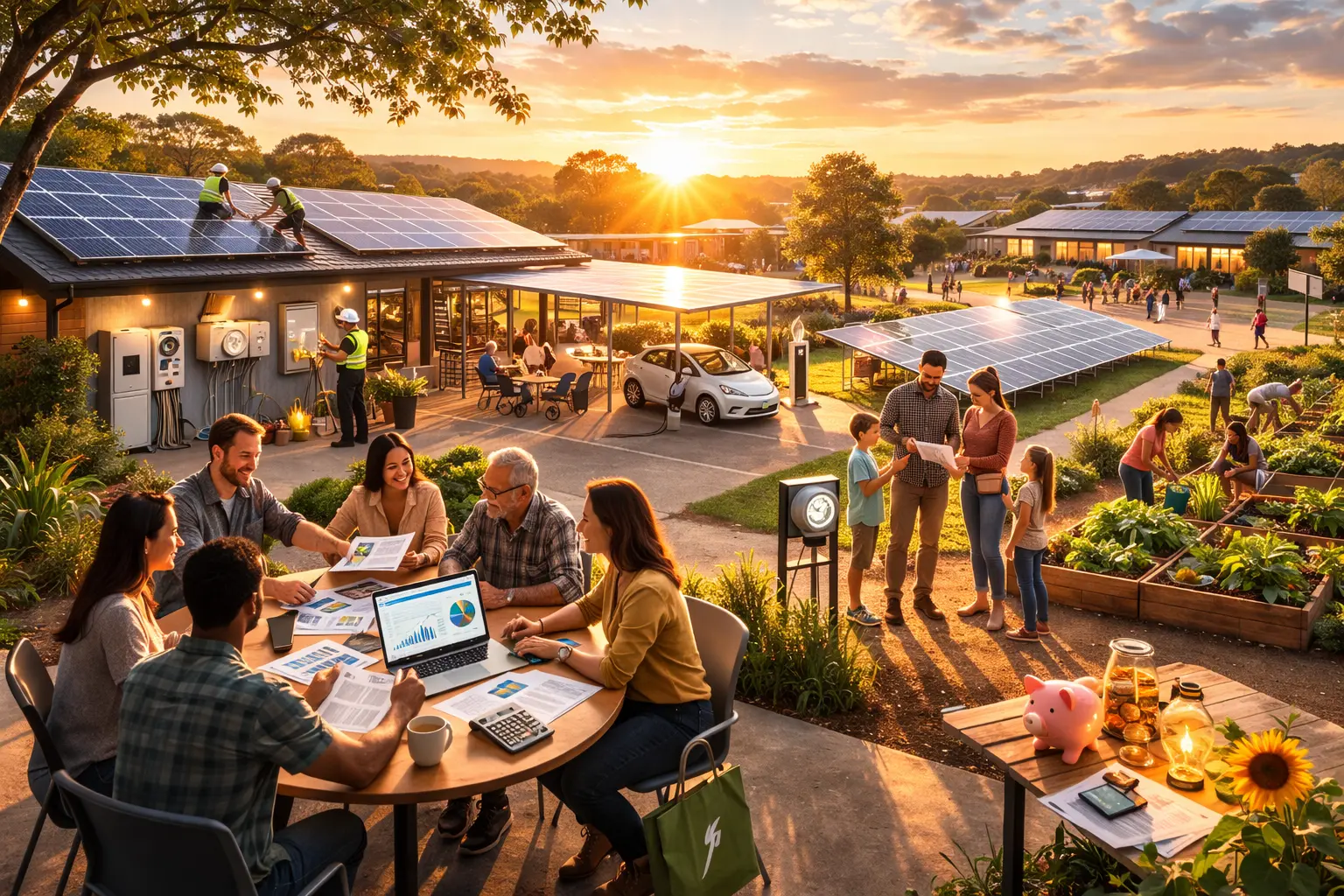
Shared renewable energy programs let communities access clean energy together at a lower cost. Instead of funding individual setups, groups of residents pool their resources and split the savings. And the difference on an energy bill can be substantial.
What does it mean exactly? Well, instead of every house funding its own solar setup, a group of households shares one system and splits the savings.
It’s simple: community solar programs connect multiple homes to a single renewable energy source. Each household draws from a shared supply, and this shift away from fossil fuels cuts energy bills while reducing greenhouse gas emissions across every home involved.
So who’s actually using these programs? After spending considerable time researching community energy programs across Australia, we’d say that the main barrier isn’t cost but awareness. Most people simply don’t know these programs exist, and because of that, they miss out on real savings.
Don’t worry, you can fix that. Many state governments have announced funding for community renewable energy projects, and the details are often sitting on their website already. If your area doesn’t have a program running yet, a small group of motivated residents can absolutely get one off the ground.
Renewable energy gives communities a strong footing. What amplifies that further is having local policy working in the same direction.
Cutting Greenhouse Gas Emissions Locally
Your council’s influence over local emissions stretches further than it looks. Councils control how communities use energy, manage waste, and plan for climate change. When residents get organised and push for change, real progress follows.
Let’s get into the specifics.
Your Council’s Role in Cutting Local Emissions
Did you know that local government sits closer to your daily life than state or federal authorities do? And that proximity counts for a lot. Councils can fund renewable energy projects, update planning rules, and back community programs that reduce emissions at a neighbourhood level.
Through our practical knowledge, we’ve seen that organised resident groups consistently get stronger results at the council level. And that’s worth keeping in mind, because the Australian Government’s climate action framework already gives councils the tools and funding to support local emissions reduction efforts.
In other words, the groundwork is already laid. Communities just need to show up and use it.
Residents, Schools, and Businesses: Everyone Has a Role
Pushing for change doesn’t require a formal title or a seat on the council. For example, community groups, schools, and local businesses can all drive stronger climate change responses at the local level.
And schools are worth a special mention here, since their involvement tends to bring families and the wider community along with them. Adding to that, residents can attend council meetings and submit formal requests for renewable energy funding. And this kind of consistent, direct pressure gets noticed.
Are you worried about financial backing? The Foundation for Rural and Regional Renewal has announced funding rounds supporting community-led climate solutions across the country.
With policy and advocacy covered, let’s get into how your community can take its first practical steps forward.
How to Get Your Community Started on Sustainability

Getting started on community sustainability is easier than most people think. The hardest part is finding out what’s already available, and once that clicks into place, the rest follows naturally.
Here’s a practical path forward.
- Contact Your Local Council: Your council likely has sustainability programs and funding opportunities already running. A single conversation with the right person can open up options you didn’t know existed.
- Research Local Eco Projects: Hundreds of community-led initiatives are already running across the country. Here: Climate Action Australia lists projects worth joining or building on in your city or region.
- Rally Your Friends and Neighbours: People are far more open to lifestyle changes when someone they trust brings it up first. Besides, getting friends involved early gives your community program the momentum it needs to grow.
- Start Small and Build: One well-run composting program or community garden delivers far more than five half-finished ideas ever will. So, we suggest you pick one project, commit to it, and let the results do the talking.
- Seek Out Funding: Local government grants and state programs exist specifically to support community sustainability efforts. Thus, a small track record of action makes any funding application considerably stronger.
As we mentioned earlier, most councils already have programs sitting there waiting for someone to ask about them. So pick up the phone and get the conversation going.
Every Street, Every Suburb: It Starts With Us
Cutting greenhouse gas emissions isn’t a job for governments alone. In fact, some of the most effective climate action in Australia is happening at street level, with communities running solar programs, planting trees, and pushing councils for stronger action. And this community-driven effort is producing real, measurable results.
In this article, we covered shared renewable energy, local eco projects, council advocacy, community composting, and five practical steps to get your neighbourhood moving. The tools are all there, and so is the support.
Our team at Eco4TheWorld will walk you through every resource, project, and action your community needs to reduce emissions and protect the planet. Communities across Australia started exactly where you are right now.
The planet isn’t waiting, and neither should you.